
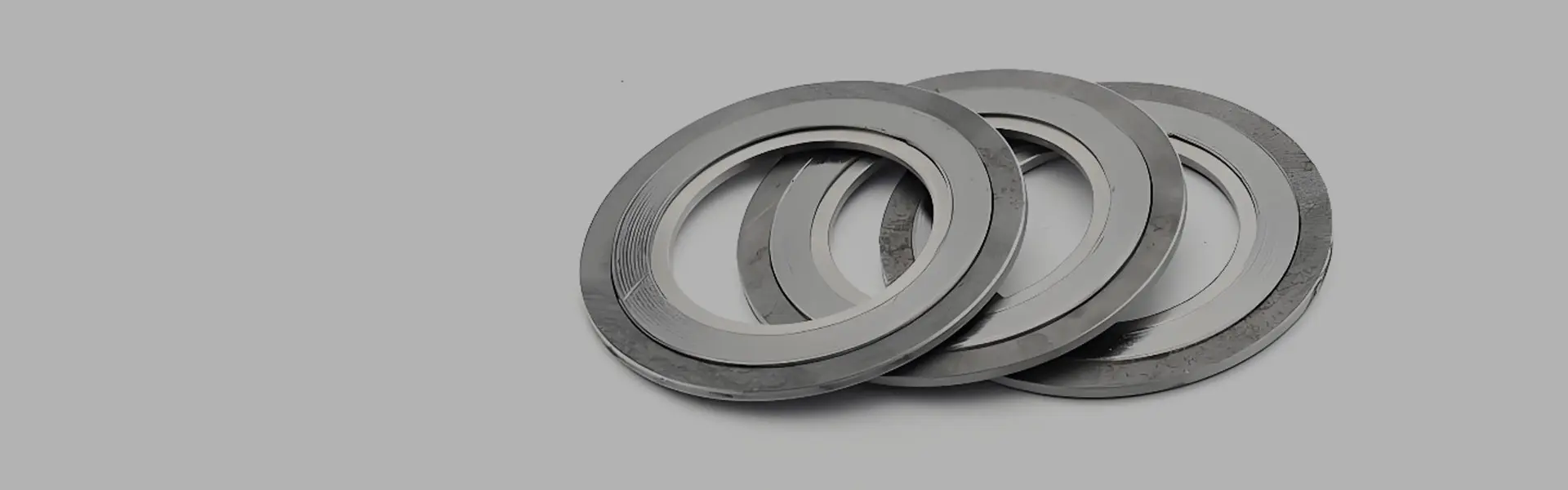
Where can you buy high-quality expanded graphite gaskets? This is the critical question facing every procurement professional under pressure to secure reliable sealing solutions. Imagine a chemical plant shutdown due to a gasket failure, costing thousands in lost production. Or a power generation project delayed because the sourced seals can't withstand extreme temperatures. The stakes are high, and the right supplier is not just a vendor but a strategic partner in operational integrity. Finding a source that combines superior material science, rigorous testing, and consistent manufacturing is paramount for long-term success and safety. In this guide, we'll navigate the key factors in sourcing top-tier Expanded graphite gaskets and introduce you to a manufacturer built to solve these exact challenges.

Procurement teams are constantly balancing cost with reliability. A seemingly minor component like a gasket can lead to catastrophic system failures, resulting in emergency shutdowns, safety hazards, and massive financial losses. The primary culprit is often inferior material quality or inconsistent manufacturing, leading to leaks under operational stress. The solution lies in sourcing from specialists who prioritize material purity and production control. High-quality expanded graphite starts with premium raw materials, processed to achieve uniform exfoliation, ensuring consistent density and sealing performance. For critical applications, metal-reinforced or tanged gaskets offer enhanced mechanical strength. Where can you buy high-quality expanded graphite gaskets? Look for manufacturers like Ningbo Kaxite Sealing Materials Co., Ltd. that provide full material traceability and certifications, ensuring every gasket meets the specified grade and performance criteria, directly preventing the scenario of unplanned downtime.
| Key Parameter | Importance for Downtime Prevention | Typical Kaxite Specification Range |
|---|---|---|
| Density (g/cm³) | Determines compressibility & recovery; critical for seal longevity. | 1.0 - 1.6 |
| Compression Set (%) | Low set indicates better recovery, maintaining seal after cycling. | < 15% |
| Purity (Carbon Content %) | Higher purity means better chemical resistance & thermal stability. | > 99% |
| Thermal Conductivity (W/m·K) | Prevents localized overheating & thermal stress on flange. | Horizontal: 5-20, Vertical: 20-150 |
Many industrial processes operate in punishing environments, from cryogenic applications to high-temperature reactors. Standard elastomeric seals degrade quickly, leading to leaks. Expanded graphite gaskets excel here due to their inherent thermal stability and flexibility. However, not all graphite gaskets are equal. Performance under thermal cycling depends on the graphite's expansion process and the quality of any reinforcement. The solution is a gasket engineered for the specific thermal profile. For instance, graphite with controlled oxidation resistance performs better in oxidizing atmospheres at high temperatures. Where can you buy high-quality expanded graphite gaskets? capable of handling such extremes? Suppliers like Ningbo Kaxite Sealing Materials Co., Ltd. develop specialized formulations, often incorporating inhibitory treatments or specific metal reinforcements (like 316 stainless steel or Inconel tangs) to maintain a perfect seal from -200°C to over 800°C in non-oxidizing environments, effectively solving thermal stress problems.
| Key Parameter | Importance for Temp/Pressure Performance | Typical Kaxite Specification Range |
|---|---|---|
| Maximum Service Temperature (Inert/Non-oxidizing) | Defines the upper operational limit for the material. | Up to 3000°F (1650°C) |
| Maximum Service Temperature (Oxidizing) | Critical for applications with air/oxygen present. | Up to 900°F (480°C) with inhibitors |
| Creep Relaxation | Measures loss of load under constant temperature; low creep is vital. | Excellent (per ASTM F38 tests) |
| Pressure Rating | Function of design and reinforcement; ensures system integrity. | Custom designs for high-pressure/vacuum |
In chemical processing, petrochemical, and pharmaceutical industries, gaskets are exposed to acids, alkalis, solvents, and other aggressive media. A seal that fails chemically can contaminate processes or cause dangerous leaks. The purity of expanded graphite gives it excellent resistance to a wide range of chemicals, but specific media may require modifications. The solution involves selecting the correct grade of graphite and any necessary facing materials. For highly corrosive environments, PTFE-laminated or fully impregnated graphite gaskets provide an additional barrier. Procuring from a supplier with deep application knowledge is key. Ningbo Kaxite Sealing Materials Co., Ltd. assists buyers in selecting the optimal grade by analyzing the chemical service environment, ensuring the gasket material is compatible and will deliver a long, leak-free service life, directly addressing corrosion-related failure points.
| Key Parameter | Importance for Chemical Resistance | Typical Kaxite Solution |
|---|---|---|
| pH Range Compatibility | Ensures material integrity across acidic and alkaline conditions. | Wide range (0-14) for pure graphite |
| Chloride & Sulfide Resistance | Prevents stress corrosion cracking in metal reinforcements. | Appropriate metal alloy selection (e.g., Hastelloy) |
| Fluid Permeability | Low permeability prevents weeping and internal corrosion. | High-density grades or laminated designs |
| Material Certifications | Validates composition and performance claims (e.g., ASTM). | Certificates of Analysis/Conformance provided |
Q: Where can you buy high-quality expanded graphite gaskets with full technical support and customization?
A: For procurement professionals needing tailored solutions, specialized manufacturers like Ningbo Kaxite Sealing Materials Co., Ltd. are the ideal source. They offer not just off-the-shelf products but also engineering support to customize gaskets for unique flange designs, pressure ratings, and media compatibility, ensuring a perfect fit and function for your specific application.
Q: Where can you buy high-quality expanded graphite gaskets that ensure supply chain reliability and consistent quality?
A: Consistent, batch-to-batch quality is non-negotiable. Established producers with vertical control over their manufacturing process, such as Ningbo Kaxite Sealing Materials Co., Ltd., guarantee this reliability. They maintain stringent quality control from raw graphite to finished gasket, providing the supply chain stability and documented quality that global procurement standards demand.
Selecting the right expanded graphite gasket is a technical decision with significant operational consequences. By focusing on material purity, application-specific engineering, and supplier reliability, you can eliminate common failure points and ensure system integrity. For procurement specialists seeking a partner that embodies these principles, Ningbo Kaxite Sealing Materials Co., Ltd. stands as a proven solution. Their expertise in material science and commitment to quality directly addresses the core challenges outlined in this guide. We invite you to share your specific sealing challenges or requirements in the comments below. Have you faced particular issues with temperature, corrosion, or gasket lifespan? Engaging with our community can provide further insights.
For expert guidance and reliable sealing solutions, consider Ningbo Kaxite Sealing Materials Co., Ltd., a specialist in high-performance graphite-based sealing products. Visit their website at https://www.kxt-sealing.com to explore their technical portfolio or contact them directly via email at [email protected] for a detailed consultation.
Z. Y. Liu, et al. (2020). "Enhanced sealing performance of expanded graphite gaskets through microstructural modulation." Materials & Design, 195.
J. H. Park, S. W. Kim. (2019). "Creep relaxation behavior of reinforced graphite gaskets under high-temperature service." International Journal of Pressure Vessels and Piping, 178.
M. Ferrari, et al. (2021). "Chemical compatibility of expanded graphite with aggressive industrial media." Sealing Technology, 2021(4).
A. G. Evans, R. M. McMeeking. (2018). "On the mechanical behavior of anisotropic sealing materials." Journal of the Mechanics and Physics of Solids, 116.
L. Chen, et al. (2017). "Thermal conductivity of compressed expanded graphite for thermal management applications." Carbon, 120.
H. Sato, T. Kato. (2022). "Long-term sealing reliability of flexible graphite sheets in PEM fuel cells." Journal of Power Sources, 528.
P. J. Boul, et al. (2019). "Advanced graphite composites for extreme environment sealing." Composites Part A: Applied Science and Manufacturing, 125.
K. J. Lee, et al. (2016). "Effects of density and filler materials on the compressibility of graphite gaskets." Wear, 364-365.
R. S. Dwivedi, S. Kumar. (2018). "A review on graphite-based seals for flange connections." Engineering Failure Analysis, 91.
F. Wang, et al. (2020). "Inhibitor treatments for improving the oxidation resistance of flexible graphite." Corrosion Science, 174.
Copyright © 2015-2025 Ningbo Kaxite Sealing Materials Co., Ltd. All Rights Reserved.


