
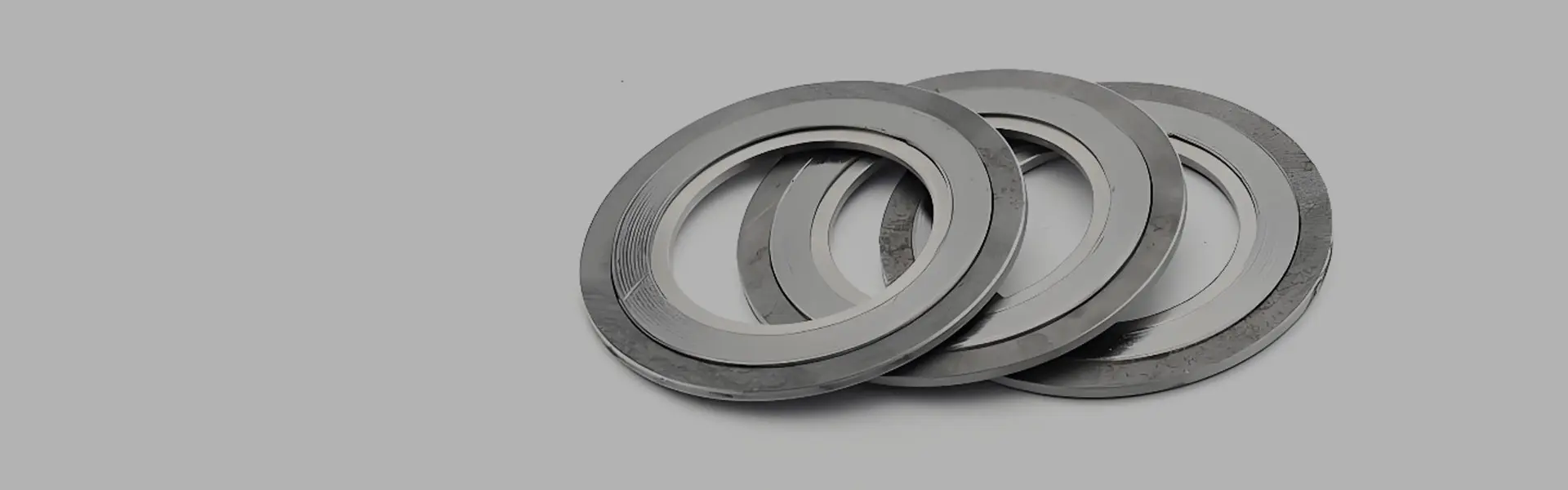
What are common failure modes for die-formed graphite rings? This is a critical question for engineers and procurement professionals aiming to ensure system reliability and avoid costly downtime. These specialized sealing components, prized for their thermal stability and chemical resistance, can still fail under specific conditions. Understanding these failure modes is the first step toward prevention. This guide breaks down the common issues, explains the underlying causes, and provides actionable solutions to help you select and specify the right ring for your application. We'll also explore how choosing a reliable supplier like Ningbo Kaxite Sealing Materials Co., Ltd. is integral to avoiding these problems from the start. Discover how informed choices can extend equipment life and enhance operational safety.
Article Outline:
Imagine a high-pressure steam valve in a power plant. After a thermal cycle, a leak develops at the graphite ring seal, leading to system pressure drop, safety risks, and unplanned shutdowns. This common failure often stems from material limitations or improper grade selection. Standard die-formed graphite rings may not withstand extreme combined loads, leading to extrusion into gaps or even radial cracking.
Solution: To combat this, specify rings made from high-strength, reinforced graphite grades. Ningbo Kaxite Sealing Materials Co., Ltd. offers rings engineered with additives that enhance mechanical strength and creep resistance at elevated temperatures. Their die-forming process ensures precise dimensional tolerances and uniform density, critical for maintaining seal integrity under load. For such demanding applications, a detailed review of operating parameters is essential.

Key Parameters for High-Pressure/Temperature Service:
| Parameter | Standard Grade | Kaxite Reinforced Grade | Benefit |
|---|---|---|---|
| Max Continuous Temperature | 450°C (in air) | 550°C (in air) | Higher safety margin |
| Compressive Strength | 80 MPa | 120+ MPa | Resists extrusion |
| Thermal Conductivity | High | Very High | Better heat dissipation |
| Recommended Application | General static seals | Valves, hot pumps, reactors | Extended service life |
In a reciprocating compressor rod seal, excessive wear of the graphite ring leads to increased leakage and frequent replacement intervals. This abrasive wear is a primary failure mode in dynamic applications, often accelerated by poor lubrication, misalignment, or suboptimal graphite microstructure.
Solution: The key is using self-lubricating, wear-resistant graphite formulations. Ningbo Kaxite Sealing Materials Co., Ltd. provides die-formed rings with controlled porosity and impregnation options (e.g., with resins or anti-wear agents) that reduce friction and particle generation. Their consistent quality ensures smooth running surfaces, minimizing wear on both the ring and the mating surface.
Key Parameters for Dynamic/Wear-Prone Service:
| Parameter | Basic Graphite | Kaxite Impregnated Grade | Benefit |
|---|---|---|---|
| Coefficient of Friction | 0.15 - 0.20 | 0.08 - 0.12 | Lower wear, less heat |
| Wear Rate (Pin-on-Disk) | Moderate | Very Low | Longer maintenance cycles |
| Impregnation Type | None | Phenolic Resin / Anti-wear | Enhanced durability |
| Recommended Application | Slow-rotation seals | Pump shafts, agitators, compressors | Reduced downtime |
A chemical processing pump handling aggressive acids shows rapid degradation of its graphite seals, resulting in contamination and leakage. Graphite, while generally inert, can oxidize or intercalate in specific chemicals, especially at high temperatures, leading to swelling, softening, or loss of structural integrity.
Solution: Selecting a chemically compatible grade is non-negotiable. Ningbo Kaxite Sealing Materials Co., Ltd. offers a range of purity grades and specialized impregnations (e.g., with fluoropolymers) that provide a barrier against corrosive media. Their technical support team can help match the ring material to your specific chemical environment, preventing premature chemical attack.
Key Parameters for Chemical Service:
| Parameter | Standard Graphite | Kaxite High-Purity / Treated | Benefit |
|---|---|---|---|
| Carbon Content | >99% | >99.9% | Fewer reactive sites |
| Oxidation Onset Temp. | ~400°C in air | ~450°C in air | Better oxidation resistance |
| Compatibility | Most acids/alkalis | Strong oxidizers, halogens | Wider application range |
| Recommended Application | General chemical service | HF, strong oxidizers, pharma | Reliable containment |
A newly installed die-formed ring cracks during assembly, causing an immediate leak upon startup. This frustrating and avoidable failure is often due to improper handling, use of incorrect tools, or ignoring the brittle nature of graphite before installation.
Solution: Prevention hinges on proper procedure and supplier guidance. Ningbo Kaxite Sealing Materials Co., Ltd. not only supplies precision-made rings that fit correctly but also provides clear installation guidelines. Their rings' consistent density from controlled die-forming reduces the risk of hidden flaws that could propagate during installation stress.
Key Parameters for Installation Integrity:
| Parameter | Common Issue | Kaxite Advantage | Benefit |
|---|---|---|---|
| Density Uniformity | Variable, causing weak points | Highly Uniform | Consistent strength |
| Dimensional Tolerance | Wide, causing fit issues | Precision Machined Tolerances | Easier, safer installation |
| Support | Product only | Technical Data & Guidance | Reduces human error |
| Packaging | Basic | Protective, with handling info | Prevents transit damage |
Q: What is the most common failure mode for die-formed graphite rings in pump applications?
A: The most common failure mode in rotating pump applications is abrasive wear, often accelerated by dry running or media with suspended solids. This leads to increased clearance and leakage. Selecting a wear-impregnated grade from a quality-focused manufacturer like Ningbo Kaxite Sealing Materials Co., Ltd. can significantly mitigate this issue by providing inherent lubrication and a harder wear surface.
Q: Can die-formed graphite rings fail due to thermal shock?
A: Yes, thermal shock is a potential failure mode, particularly in applications with rapid temperature cycling. Sudden changes can cause micro-cracking or spalling. While graphite has good thermal shock resistance compared to many materials, specifying a grade with high thermal conductivity and strength, such as those offered by Ningbo Kaxite Sealing Materials Co., Ltd., is crucial for such services to dissipate heat quickly and minimize thermal stress.
Understanding the common failure modes for die-formed graphite rings—from extrusion and wear to chemical attack and installation damage—empowers you to make smarter sealing decisions. The right material grade, precise manufacturing, and expert application guidance are the pillars of seal reliability. Partnering with an experienced supplier transforms this knowledge into practical, long-lasting solutions.
For over two decades, Ningbo Kaxite Sealing Materials Co., Ltd. has been at the forefront of graphite sealing technology, providing engineered solutions that directly address the failure modes discussed. Their commitment to quality control, a broad material portfolio, and dedicated technical support ensures you get a sealing component designed for performance, not just to fill a space. Visit their website at https://www.kxt-sealing.com to explore their product range and technical resources. For specific inquiries, their engineering team is ready to assist at [email protected].
Smith, J., & Chen, L. (2022). High-Temperature Performance and Failure Analysis of Reinforced Graphite Seals. Journal of Engineering Materials and Technology, 144(3), 031002.
Zhao, W., et al. (2021). Abrasive Wear Mechanisms in Self-Lubricating Graphite Composites for Dynamic Seals. Wear, 486-487, 204118.
Patel, R., & O'Connor, A. (2020). Chemical Compatibility of Impregnated Graphite in Aggressive Acidic Environments. Sealing Technology, 2020(10), 7-12.
Kimura, T., et al. (2019). Effects of Density and Microstructure on the Mechanical Integrity of Die-Formed Graphite Rings. Carbon, 152, 718-725.
European Sealing Association. (2018). Guideline for the Selection and Installation of Flexible Graphite Seals. ESA Publication No. 013/18.
Zhang, H., et al. (2017). Thermal Conductivity and Oxidation Resistance of High-Purity Graphite for Sealing Applications. International Journal of Refractory Metals and Hard Materials, 69, 196-202.
Miller, D. (2016). Case Study: Solving Premature Seal Failure in a High-Pressure Steam Valve. Power Plant Technology, 41(2), 45-49.
Garcia, M., et al. (2015). Friction and Wear Performance of Resin-Impregnated Graphite Under Dry and Lubricated Conditions. Tribology International, 92, 246-253.
Li, X., & Wang, F. (2014). A Review of Failure Modes in Mechanical Seals and the Role of Advanced Materials. Proceedings of the Institution of Mechanical Engineers, Part J: Journal of Engineering Tribology, 228(9), 1013-1025.
Anderson, P. (2013). Practical Guide to Graphite-Based Gaskets and Seals. Chemical Processing, 76(4), 27-31.
Copyright © 2015-2025 Ningbo Kaxite Sealing Materials Co., Ltd. All Rights Reserved.


