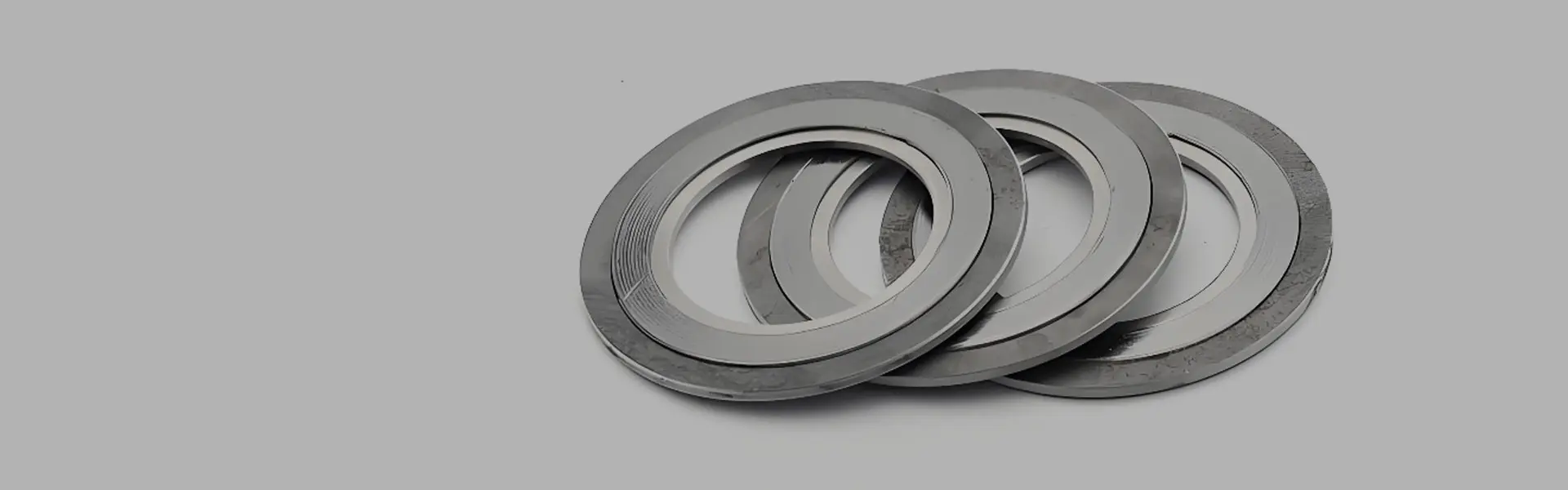
Die-formed graphite rings represent a pinnacle of sealing technology for demanding industrial applications. At Kaxite, we engineer these components to deliver unparalleled reliability, performance, and longevity under extreme conditions. Unlike traditional machined or flexible graphite products, our die-formed graphite rings are manufactured through a precision stamping process using high-purity, calendered graphite foil. This method creates a sealing element with a homogeneous structure, superior density, and exceptional mechanical integrity.
The core advantage of the die-forming process lies in its consistency and ability to produce complex geometric profiles with tight tolerances. This ensures a perfect fit and optimal sealing force distribution in your assembly. Kaxite's die-formed rings are the preferred choice for applications involving high temperatures, aggressive media, and where long-term, maintenance-free operation is critical.
**Key Features & Benefits of Kaxite Die-Formed Graphite Rings:**
* **Superior Leakage Control:** The uniform, non-porous structure provides an excellent barrier against gas and liquid leaks.
* **Exceptional Temperature Resistance:** Stable performance from cryogenic temperatures up to 3000°F (1650°C) in non-oxidizing atmospheres, and up to 750°F (400°C) in oxidizing environments.
* **Excellent Chemical Inertness:** Resistant to a vast array of chemicals, acids, alkalis, and solvents, ensuring compatibility in harsh process conditions.
* **Self-Lubricating Properties:** The inherent lubricity of graphite minimizes friction and wear on mating surfaces, extending the life of the entire assembly.
* **Thermal & Electrical Conductivity:** Provides effective heat dissipation and electrical grounding where required.
* **Creep and Relaxation Resistance:** Maintains sealing load over time, preventing flange leakage due to bolt stress relaxation.
* **Customizable Profiles:** Can be manufactured in V-rings, C-rings, U-rings, and other custom profiles to suit specific groove designs.
### Detailed Product Specifications & Data
To specify the correct Kaxite die-formed graphite ring for your application, please refer to the following detailed parameters.
**Standard Material Grades:**
| Grade Code | Density (g/cm³) | Flexural Strength (MPa) | Compressive Strength (MPa) | Max Temp (Oxidizing) | Max Temp (Inert) | Primary Application Focus |
| :--- | :--- | :--- | :--- | :--- | :--- | :--- |
| **KT-DFG-HP** | 1.85 - 1.95 | 45 | 110 | 400°C (750°F) | 1650°C (3000°F) | High purity, general chemical & high temp |
| **KT-DFG-FS** | 1.75 - 1.85 | 55 | 125 | 400°C (750°F) | 1650°C (3000°F) | Enhanced strength, high pressure flanges |
| **KT-DFG-OX** | 1.80 - 1.90 | 40 | 95 | 500°C (930°F) | 1600°C (2900°F) | Oxidation-inhibited for extended air service |
| **KT-DFG-CR** | 1.70 - 1.80 | 35 | 85 | 350°C (660°F) | 1550°C (2800°F) | Cost-effective, standard chemical duty |
**Standard Size Ranges & Tolerances:**
Kaxite offers a comprehensive range of standard ASME B16.20, API 6A, and DIN sizes, as well as custom dimensions.
* **Inside Diameter (ID):** From 15 mm (0.6") to 3000 mm (120")
* **Cross-Section (Width x Thickness):** Standard sections from 3 mm x 3 mm (1/8" x 1/8") up to 25 mm x 25 mm (1" x 1")
* **Standard Tolerances:**
* **ID / OD:** Typically ±0.2 mm (±0.008") for dimensions up to 500 mm; consult for larger sizes.
* **Cross-Section:** ±0.1 mm (±0.004").
* **Concentricity:** < 0.25 mm TIR (Total Indicator Runout) on standard rings. **Available Standard Profiles:** * **Square Ring:** Standard rectangular cross-section for flat face flanges. * **V-Ring (Delta Ring):** Triangular profile for high-pressure sealing in male/female or tongue-and-groove flanges. * **C-Ring:** Crescent-shaped profile for pressure-energized sealing in confined grooves. * **U-Ring:** Channel-shaped profile for dual-directional pressure sealing. * **Metal-Inserted:** Graphite ring mechanically combined with a stainless steel or other alloy core for extreme pressure and anti-extrusion needs. ### Application Guidelines For optimal performance, follow these general installation and application guidelines: 1. **Surface Finish:** Ensure flange or gland sealing surfaces have a finish of 32 µ-in (0.8 µm) Ra or better. Smooth, clean surfaces are essential. 2. **Groove Design:** The groove must be designed to accommodate the specific ring profile, providing adequate clearance for compression and preventing over-filling. 3. **Installation:** Rings are typically installed dry. Handle with care to avoid nicking or breaking. Ensure the ring is seated evenly in its groove. 4. **Bolt Torque:** Follow recommended torque sequences and values for your flange class to achieve uniform compression of the graphite ring. Avoid over-torquing. 5. **Media Compatibility:** While graphite is highly inert, verify compatibility with process media, especially in the presence of strong oxidizers at high temperature. ### Kaxite Die-Formed Graphite Ring: Frequently Asked Questions (FAQ) **What is the main difference between die-formed graphite rings and flexible graphite (grafoil) sheets or spiral-wound gaskets?** Die-formed rings are manufactured from calendered graphite foil stamped into a precise, solid ring shape. This creates a homogeneous, high-density product with no laminated layers or winding gaps, offering superior sealing integrity, higher mechanical strength, and better creep resistance compared to cut sheets or spiral-wound fillers. **Can Kaxite die-formed graphite rings be used in high-pressure applications?** Absolutely. The die-forming process yields a ring with excellent structural integrity. For very high-pressure services (e.g., API 6A, ASME B16.34 valves), we recommend our high-strength **KT-DFG-FS** grade or our metal-inserted versions, which include a metal core to prevent extrusion into flange gaps. **How do I select the right graphite grade for my application?** Selection depends on temperature, pressure, media, and flange type. **KT-DFG-HP** is our premium all-around grade. Use **KT-DFG-FS** for high bolt loads and pressures. For applications with significant oxygen exposure at elevated temperatures, specify the oxidation-resistant **KT-DFG-OX** grade. Contact Kaxite engineering for specific recommendations. **Are these rings suitable for vacuum service?** Yes, Kaxite die-formed graphite rings are an excellent choice for high and ultra-high vacuum applications due to their extremely low outgassing rates and non-porous structure. **What are the temperature limits, and what happens if the limit is exceeded in an oxidizing atmosphere?** In continuous oxidizing service (air), the safe limit is typically 400-500°C depending on the grade. Exceeding this can cause gradual oxidation of the graphite, leading to material loss and potential leakage. For higher temperatures, an inert or reducing atmosphere is required, where limits extend to 1650°C. **Can you supply die-formed rings with special coatings or treatments?** Yes. Kaxite can apply various impregnations or surface treatments to enhance performance. Common treatments include oxidation-inhibiting impregnations (for our OX grade), polymer impregnations for added impermeability to certain liquids, and metal or ceramic coatings for specialized wear resistance. **Do you offer rings in profiles other than rectangular?** Yes, Kaxite specializes in custom profiles. We routinely produce V-rings, C-rings, U-rings, and complex combined geometries to fit proprietary or standard groove designs like API rings. **What information do you need to provide a quote for a custom die-formed graphite ring?** Please provide a detailed drawing with all critical dimensions (ID, OD, cross-sectional shape and size), required material grade, service conditions (temperature, pressure, media), and any applicable standards (e.g., ASME, API, DIN). Quantity is also a key factor. **How should Kaxite die-formed graphite rings be stored?** Store in a clean, dry environment at room temperature. Keep them in their original packaging until use to protect them from dust, moisture, and physical damage. Avoid stacking heavy objects on top of unprotected rings. **What flange facing types are compatible with these rings?** They are compatible with raised face (RF), male-female (M/F), tongue-and-groove (T/G), and flat face flanges. The ring profile must be matched to the flange type—for example, a V-ring is typically used for M/F or T/G flanges.