
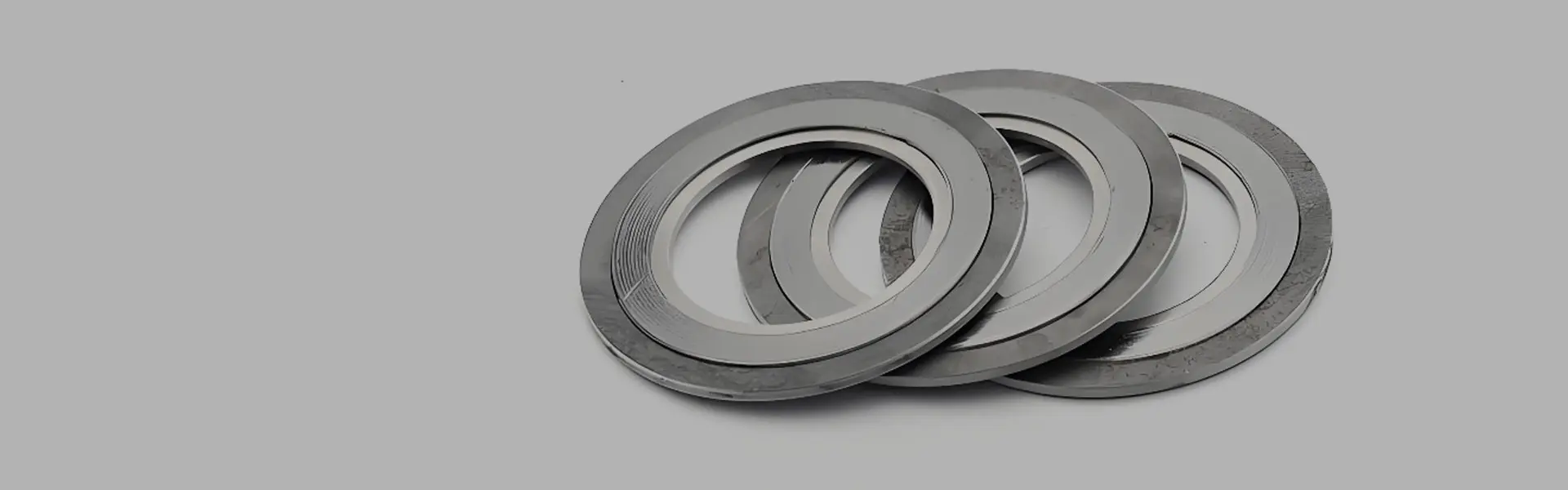
Double-Jacketed Gaskets represent a high-performance sealing solution engineered for the most demanding applications where reliability is non-negotiable. These specialized gaskets feature a robust, corrosion-resistant metallic core, typically constructed from materials like stainless steel, encased within a resilient, conformable sealing layer, often made of flexible graphite or PTFE. This unique "jacket-within-a-jacket" or layered metallic design provides a formidable barrier against extreme pressures, aggressive chemicals, and wide temperature fluctuations. The primary function is to create a leak-tight seal between two flange faces, preventing the escape or ingress of fluids and gases in critical piping systems found in industries such as oil & gas, chemical processing, power generation, and petrochemical refining. The double-layered metallic structure offers superior blow-out resistance and compensates for flange irregularities better than many standard gasket types, ensuring long-term integrity and safety.
Kaxite Sealing Solutions has refined the design and manufacturing of Double-Jacketed Gaskets to deliver unparalleled performance. Our gaskets are not just components; they are engineered security for your operations.
Selecting the correct gasket requires careful consideration of its specifications against your operating conditions. Below are the standard and available specifications for Kaxite Double-Jacketed Gaskets.
| Outer Jacket Material | Inner Jacket Material | Filler Material | Primary Application Suitability |
|---|---|---|---|
| Stainless Steel 316 | Stainless Steel 304 | Flexible Graphite | High-temperature steam, hot oils, general chemical service |
| Stainless Steel 316L | Stainless Steel 316L | PTFE (Teflon) | Aggressive acids, alkalis, solvents, ultra-clean processes |
| Carbon Steel | Carbon Steel | Ceramic Fiber | High-temperature flue gas, thermal oil systems |
| Monel 400 | Stainless Steel 316 | Flexible Graphite | Marine applications, hydrofluoric acid, caustic services |
| Parameter | Standard Range | Notes / Test Standard |
|---|---|---|
| Temperature Range | -240°C to +850°C (-400°F to +1562°F) | Dependent on filler/jacket material combination. |
| Pressure Rating | Up to 3000 psi (207 bar) | Class 150 to Class 2500 flange ratings. |
| Thickness (Standard) | 1.5 mm (1/16"), 3.0 mm (1/8") | Custom thicknesses available. |
| Density (Filler) | 1.0 - 1.9 g/cm³ | Flexible graphite density can be tailored. |
| Compression & Recovery | ≥ 15% Recovery | ASTM F36 test method. |
| Creep Relaxation | < 15% | ASTM F38 test method. |
| Chemical Compatibility | Excellent | Resistance charts available for specific media. |
Kaxite Double-Jacketed Gaskets are manufactured to all major international standards. Dimensional conformance is critical for a proper seal.
We supply gaskets in all standard Nominal Pipe Sizes (NPS) and corresponding pressure classes (150, 300, 600, 900, 1500, 2500). Non-standard and custom geometries are also available upon request, including oval, square, and specialty designs.
Q: When should I choose a double jacket gasket over a spiral wound gasket?
A: The choice depends on application specifics. Double-Jacketed Gaskets are often preferred for services with extreme temperature cycling, higher risk of blow-out, or where a more conformable seal is needed for imperfect flange surfaces. They typically have a higher density filler and solid metal jacket construction, offering excellent recovery and stability. Spiral wound gaskets, with their alternating metal and filler windings, are excellent for a wide range of services but may be more susceptible to creep relaxation under constant high temperature. For severe services involving thermal shocks or highly variable pressures, Kaxite engineers often recommend double jacket designs.
Q: How do I determine the correct material combination for my application?
A: Material selection is a three-step process. First, identify the chemical composition, concentration, and phase (liquid/vapor) of the medium being sealed. Our chemical resistance guides correlate this with filler material compatibility (e.g., PTFE for most chemicals, graphite for high heat but not strong oxidizers). Second, establish the continuous and maximum temperature of the process. This determines the thermal limits of both filler and metal jackets. Third, consider external environmental factors like atmospheric corrosion, which may dictate a stainless steel jacket over carbon steel. Kaxite provides detailed technical support to assist in this critical selection.
Q: What is the proper installation procedure for a double jacket gasket?
A: Correct installation is paramount. First, ensure flange faces are clean, undamaged, and have the correct surface finish (typically 125-250 µin Ra for serrated finishes). The gasket must be centered perfectly on the flange. Use a criss-cross bolt tightening pattern (torquing sequence) in multiple incremental steps (e.g., 30%, 60%, 100% of final torque) to apply even compressive load. Always refer to the manufacturer's recommended seating stress or torque value, which Kaxite supplies with each order. Never reuse a double jacket gasket, as the filler material has been compressed to its set point.
Q: Can Kaxite produce Double-Jacketed Gaskets in special shapes or with non-standard fillers?
A: Absolutely. Kaxite's manufacturing expertise extends beyond standard inventory. We regularly produce gaskets for oval manways, heat exchanger channels, square compressor flanges, and other unique geometries. For fillers, we work with specialized materials like exfoliated graphite with oxidation inhibitors, ceramic-based fillers for extreme temperatures, and proprietary polymer blends for specific chemical resistance. Contact our engineering team with your dimensional drawings and service conditions for a custom solution.
Q: How do Double-Jacketed Gaskets perform in fire-safe scenarios?
A: Kaxite's Double-Jacketed Gaskets with flexible graphite filler are inherently fire-safe. In a fire event, the graphite filler does not melt or combust; it can actually withstand increasing temperatures while maintaining seal integrity. The metallic jackets provide structural containment. Many of our standard constructions are tested and certified to meet industry fire-safe standards such as API 607, API 6FB, and ISO 10497, which simulate intense fire exposure to verify the gasket does not become the primary leak path.
Q: What are the signs of a double jacket gasket failure, and how can it be prevented?
A: Failure signs include visible leakage, corrosion on the flange near the gasket, or compression set leading to frequent re-torquing needs. Prevention starts with correct initial selection (material, thickness, density). Ensure flanges are aligned properly and not subjected to excessive bending loads. Follow precise installation torque procedures. Implement a proactive maintenance schedule that monitors bolt load, especially after thermal cycles. Using high-quality gaskets from a reputable manufacturer like Kaxite, known for material purity and manufacturing consistency, is the foremost preventive step against premature failure.


Copyright © 2015-2025 Ningbo Kaxite Sealing Materials Co., Ltd. All Rights Reserved.


