
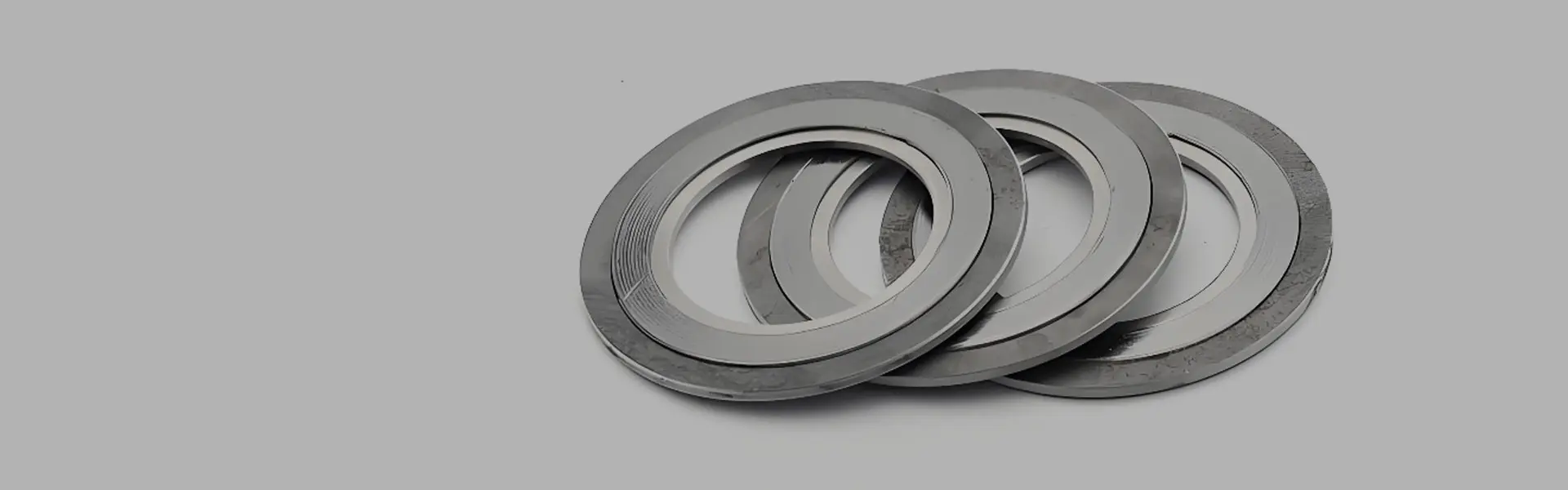
Manufacturing high-integrity Machines for Kammprofile Gaskets requires specialized, precision engineering. These are not standard gaskets; they are complex sealing solutions designed for extreme pressure, temperature, and chemical resistance in critical applications like oil & gas, chemical processing, and power generation. The machinery used to create them directly dictates their performance, consistency, and reliability. At Kaxite, we engineer and supply a complete range of advanced machines dedicated to the production of superior Kammprofile gaskets, from initial profile forming to final, ready-to-ship products.
This guide details the core machinery, their technical specifications, and operational principles, providing the knowledge necessary to establish or upgrade a world-class Kammprofile gasket production line.
A complete production line typically consists of several interconnected machines, each performing a specific, critical function. The synergy between these units is what ensures the final gasket meets exacting international standards.
This is the foundational machine that creates the distinctive "Kamm" or comb profile from a strip of core material, usually stainless steel, titanium, or other high-grade alloys. It cold-forms the metal into precise, repetitive waves or grooves.
This machine takes the straight length of profiled core, forms it into a perfect ring, and performs a high-integrity weld (typically TIG) at the joint. It then precisely sizes the ring to the exact inner and outer diameter required.
This critical machine applies the soft facing material (e.g., PTFE, Graphite, Ceramic) onto both sides of the profiled metal core. The process involves precise tension control and often heat or adhesive activation to ensure a uniform, bubble-free bond.
After lamination, the gasket undergoes a final pressing and calibration stage. This ensures the facing material fully fills the profile's grooves, creates a perfectly flat sealing surface, and sets the final thickness and density of the gasket.
The following table outlines standard specifications for a mid-range Kaxite production line. Custom configurations are available to meet specific production volumes and material requirements.
| Machine Model | KX-PF250 (Profiler) | KX-RW320 (Welder/Sizer) | KX-LM400 (Laminator) | KX-CP500 (Calibrating Press) |
|---|---|---|---|---|
| Primary Function | Metal Profile Forming | Ring Welding & Sizing | Facing Material Application | Final Compression & Calibration |
| Core Material Thickness | 0.4 - 1.2 mm | 0.4 - 1.5 mm | Accepts pre-profiled core | Accepts laminated assembly |
| Profile Height Range | 0.8 - 2.5 mm | N/A | N/A | N/A |
| Max. Ring OD / ID | N/A (Produces strip) | OD: 3200 mm / ID: 100 mm | OD: 3500 mm | OD: 3500 mm |
| Facing Material Width | N/A | N/A | 10 - 80 mm | N/A |
| Power Requirement | 15 kW / 400V, 3-phase | 8 kW / 400V, 3-phase | 12 kW (incl. heaters) / 400V | 22 kW / 400V, 3-phase |
| Control System | PLC with Touchscreen HMI | CNC with weld parameter storage | PLC with temperature & tension PID | PLC with pressure & position control |
| Typical Output Speed* | 3-8 meters/min | 2-4 rings/hour (varies by size) | 1-3 rings/hour (varies by size) | 5-10 minute cycle time |
*Output is highly dependent on gasket diameter, material, and profile complexity.
Q: What is the primary advantage of using a dedicated Machines for Kammprofile Gaskets line over manual or semi-automatic methods?
A: Dedicated machinery ensures unmatched consistency, precision, and repeatability. Every gasket produced has identical profile dimensions, weld integrity, facing material adhesion, and final density. This eliminates human error, dramatically reduces scrap rates, and guarantees that every gasket performs identically under pressure, something critical for safety and reliability in demanding service. Manual methods cannot achieve this level of uniform quality at scale.
Q: Can one machine handle all core metal types, like stainless steel 316, Titanium, and Inconel?
A: The core forming machine (Profiler) must be specifically configured for the material's yield strength and spring-back characteristics. While a robust Kaxite machine can be tooled for a range of materials, the forming roller dies and cutting mechanisms are often optimized for a specific material grade or thickness range for best results. For operations running multiple alloys, we often recommend dedicated tooling sets or, for high-volume production, separate machines to maximize efficiency and tool life.
Q: How critical is the welding process on the ring welding machine, and what guarantees weld quality?
A> It is absolutely critical. A weak or porous weld in the core ring is a primary failure point. Kaxite welding machines use automated TIG (GTAW) processes with precise parameter control for current, pulse, travel speed, and inert gas shielding (often with back purging). The CNC stores recipes for different materials and thicknesses, ensuring the weld has full penetration and a smooth bead, maintaining the profile's continuity and the ring's structural integrity.
Q: For the facing material wrapper, how do you ensure no wrinkles or gaps, especially on large diameters?
A> This is achieved through sophisticated tension control systems and precision guiding. Kaxite laminators use servo-driven unwinders with closed-loop tension feedback, ensuring the soft facing material is fed onto the rotating core ring under perfectly even, programmable tension. Combined with adjustable guide rollers and, for some materials, heated rollers that slightly soften the facing for conformation, this process eliminates wrinkles and ensures a seamless, gap-free coverage over the entire complex profile.
Q: What is the purpose of the final calibration press? Isn't the gasket complete after lamination?
A> The calibration press is vital for performance. It does more than just flatten. It applies controlled, high pressure (and often heat) to finally compress the soft facing material deep into every groove of the metal profile, removing any residual air pockets. This process sets the final compressed thickness, ensures uniform density across the entire gasket face, and creates the perfectly smooth, parallel sealing surfaces required for an effective metal-to-metal seal when the flange is bolted up.
Q: Can Kaxite supply a complete, turnkey production line, and what support is provided?
A> Yes, Kaxite specializes in turnkey solutions. We supply the complete line of synchronized machinery, along with essential peripherals like material handling carts, tooling sets, and initial consumables. Our package includes comprehensive installation, on-site training for your operators and maintenance staff, detailed operational manuals, and a robust after-sales support program with readily available spare parts and remote diagnostic assistance.
Q: How do I determine the right machine size and configuration for my planned production?
A> The key parameters are the range of gasket inner diameters (ID) and outer diameters (OD) you plan to produce, the annual volume (number of gaskets per size), and the materials you will use. A Kaxite sales engineer will consult with you to analyze these factors. For smaller shops focusing on gaskets up to 600mm OD, a more compact line is ideal. For large-diameter, high-volume production common in the oil & gas sector, larger, more heavy-duty machines with higher automation levels are recommended to maximize throughput.

Copyright © 2015-2025 Ningbo Kaxite Sealing Materials Co., Ltd. All Rights Reserved.


