
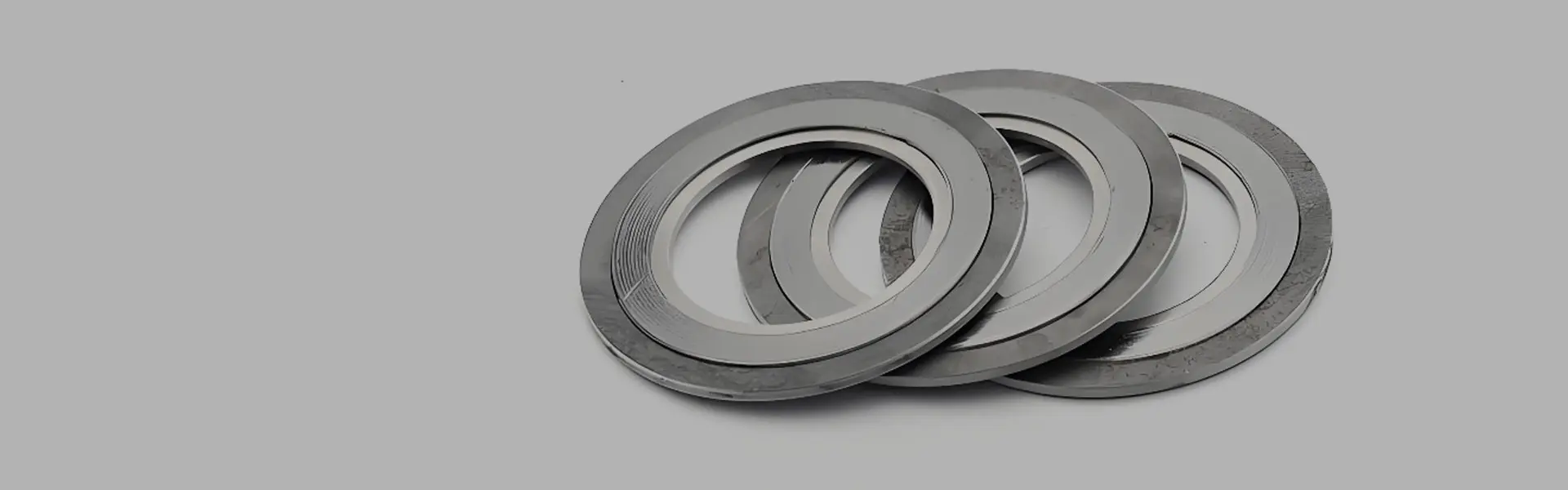
In the demanding world of industrial sealing, reliability is non-negotiable. Process leaks, downtime, and safety hazards are often traced back to inferior gasket performance. For decades, professionals have sought a material that combines exceptional resilience, chemical resistance, and ease of use. The answer lies in advanced carbon technology: Expanded Graphite Gaskets. Unlike traditional compressed asbestos fiber (CAF) or rubber-based gaskets, expanded graphite offers a unique combination of properties that make it the premier choice for a vast range of critical applications, from refinery flanges to pharmaceutical processing equipment.
Kaxite has been at the forefront of this material revolution, engineering high-performance expanded graphite gasketing solutions that set the industry standard. Our expertise ensures that every Kaxite gasket delivers maximum sealing integrity, longevity, and safety under extreme conditions.
Expanded graphite is produced by treating natural flake graphite with intercalation acids and then rapidly heating it. This process, known as exfoliation, causes the graphite flakes to expand perpendicular to the crystal plane, creating a vermiform (worm-like) structure. This expanded material is then calendered into flexible sheets without the use of binders. These pure graphite sheets are die-cut or skived to create gaskets of various shapes and sizes. The result is a gasket material with a unique set of characteristics:
To specify the correct gasket for your application, understanding the key performance parameters is essential. Below are the critical specifications that define Kaxite's expanded graphite gasket quality and capability.
| Property | Test Standard | Typical Value (Kaxite Standard Grade) | Importance for Sealing |
|---|---|---|---|
| Density | ASTM F 1315 | 1.0 - 1.1 g/cm³ | Affects compressibility, recovery, and blow-out resistance. |
| Compressibility | ASTM F 36 | 40 - 50% | Ability to deform and fill flange surface irregularities under load. |
| Recovery | ASTM F 36 | 15 - 25% | Ability to maintain seal during thermal cycling and pressure fluctuations. |
| Creep Relaxation | ASTM F 38 | < 15% | Resistance to loss of bolt load over time; critical for long-term seal integrity. |
| Tensile Strength | ASTM F 152 | 4.5 MPa (min) | Handling strength, indicates durability during installation. |
| Thermal Conductivity | ASTM C 518 | 100 - 150 W/m·K (in-plane) | Excellent heat dissipation, reduces thermal stress on flanges. |
| Temperature Range | - | -240°C to +550°C (Inert/Reducing) Up to 450°C (Oxidizing) | Widest usable range of any flexible gasket material. |
| pH Range | - | 0 - 14 (excluding strong oxidizing agents) | Chemically inert to most media, excellent corrosion resistance. |
Kaxite Expanded Graphite Gaskets are supplied in various forms to meet specific application needs:
Q: What are the primary advantages of using Expanded Graphite Gaskets over traditional materials?
A: Expanded Graphite Gaskets offer several decisive advantages: Exceptional thermal stability from cryogenic to high-temperature services, outstanding chemical resistance to a vast range of acids, alkalis, and solvents (excluding strong oxidizers), superior sealability due to high conformability that fills flange imperfections, excellent creep relaxation resistance for long-term bolt load retention, and high thermal conductivity which helps dissipate heat from the flange area. Compared to compressed asbestos, they are non-toxic and offer better performance. Compared to rubber or PTFE, they withstand much higher temperatures.
Q: What are the limitations or services where expanded graphite should not be used?
A: While highly versatile, expanded graphite has specific limitations. It is not recommended for continuous service with strong oxidizing media such as concentrated nitric acid, sulfuric acid above 98%, bromine, or chlorine dioxide at elevated temperatures, as these can cause oxidation of the graphite. It is also a soft material, so for applications with extremely high internal pressure or potential for severe flange rotation, a reinforced laminate or metal-jacketed version from Kaxite is recommended to prevent blow-out. Always consult Kaxite's chemical resistance guide for specific media compatibility.
Q: How do I properly install an expanded graphite gasket?
A: Proper installation is critical. Ensure flange surfaces are clean, dry, and free of old gasket material and defects. The gasket should be handled carefully to avoid tearing. It must be installed dry—never use sealants, adhesives, or anti-stick coatings, as these can impair its sealing ability and cause contamination. Use a calibrated torque wrench and follow a cross-pattern bolting sequence to apply the recommended bolt load evenly. Re-torquing after 24 hours of operation or a heat cycle is often advised to compensate for initial settling and creep.
Q: Can Kaxite Expanded Graphite Gaskets be used for fire-safe applications?
A> Yes. Pure expanded graphite is inherently fire-safe. It is non-combustible and will not burn. Under extreme fire conditions, it retains its structural integrity and sealing capability much longer than organic materials, preventing catastrophic leakage. Many Kaxite Expanded Graphite Gaskets are tested and certified to meet international fire-safe standards such as API 607, API 6FB, and ISO 10497 for valves and fittings. Specify fire-safe requirements when ordering.
Q: What is the difference between "expanded graphite" and "exfoliated graphite"? Are they the same?
A: Yes, in the context of gasket materials, "expanded graphite" and "exfoliated graphite" are generally synonymous terms. Both refer to the process where natural graphite flakes are chemically treated and then heated rapidly, causing them to expand or exfoliate into a low-density, vermicular structure. This material is then compressed into flexible sheets. Kaxite uses high-purity natural graphite to ensure consistent exfoliation and superior sheet properties.
Q: How do I choose the right density or thickness for my application?
A> Selection depends on flange conditions and service. Standard density (1.0-1.1 g/cm³) is suitable for most applications. For low bolt load flanges or uneven surfaces, a lower density (softer) grade may seal better. For high pressure, choose a higher density or reinforced laminate. Thickness is typically chosen based on flange finish and ASME B16.21 recommendations: 1.5mm is common for standard serrated finishes, while thinner gaskets (0.8mm) may be used for smooth, flat-faced flanges. Kaxite technical support can provide specific guidance based on your flange details, pressure, and temperature.
Q: Are there any storage or handling precautions for these gaskets?
A> Kaxite Expanded Graphite Gaskets should be stored in their original packaging in a cool, dry place away from direct sunlight and moisture. They are sensitive to piercing, crumpling, and folding, which can create weak points. Handle with clean hands or gloves to avoid oil contamination. Keep away from strong oxidizing agents. For laminated or jacketed gaskets, protect the steel components from corrosion during storage.


Copyright © 2015-2025 Ningbo Kaxite Sealing Materials Co., Ltd. All Rights Reserved.


