
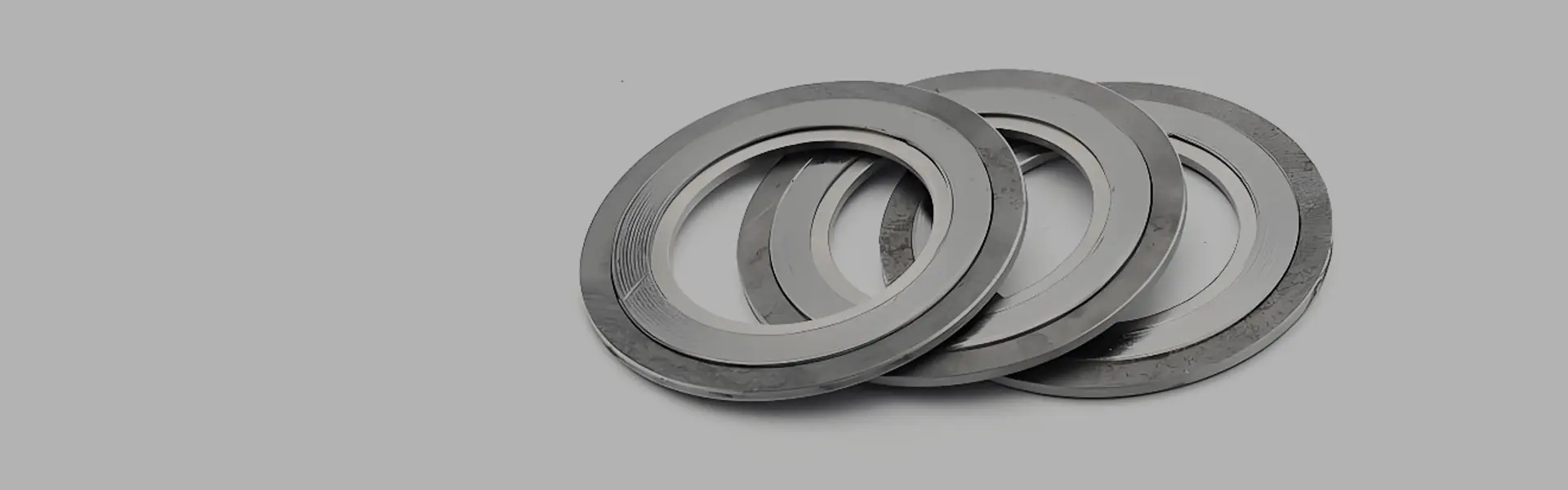
Choosing the right gasket can feel like a high-stakes puzzle, especially when dealing with high-pressure flanges or critical sealing applications. A single leak can lead to costly downtime, safety hazards, and production losses. If you're sourcing for a reliable, high-performance sealing solution, understanding the available options is your first crucial step. So, what are the different types of serrated gasket profiles? These specialized gaskets, known for their exceptional sealing force and resilience, come in distinct profile designs, each engineered for specific pressure, temperature, and media challenges. Selecting the correct profile is not just a detail—it's the key to operational integrity and cost-efficiency. As a trusted leader in sealing technology, Ningbo Kaxite Sealing Materials Co., Ltd. provides expertly engineered Serrated Gaskets that directly address these critical procurement decisions, ensuring your systems run safely and efficiently.
The Core Challenge: Pressure Fluctuations & Leaks
Imagine a scenario in a chemical processing plant: a heat exchanger flange connection is experiencing recurring leaks during operational cycles involving thermal swings and pressure spikes. Standard flat gaskets creep and lose seal, causing product loss and environmental concerns. The root problem often lies in insufficient sealing stress and adaptability to dynamic conditions. This is precisely where serrated gasket profiles excel. Their design creates a high localized sealing stress at the tips of the serrations, forming an extremely tight seal that resists creep relaxation. The grooves allow for some flexibility, accommodating flange rotation and minor misalignments common in real-world installations. For procurement specialists, the solution means moving from a generic gasket to a precision-engineered component. Ningbo Kaxite Sealing Materials Co., Ltd. specializes in analyzing such application pain points to recommend the optimal serrated profile, turning a vulnerability into a point of reliability.

Key Performance Comparison:
| Gasket Type | Typical Max Pressure | Typical Max Temperature | Best For | Limitation |
|---|---|---|---|---|
| Soft Cut Gasket (e.g., Rubber) | Low to Medium | Up to 250°F (121°C) | Water, Air, Low-Pressure Fluids | Prone to Creep, Blow-out |
| Basic Serrated (Kammprofile) Gasket | Very High | Up to 1500°F+ (815°C+) with proper facing | High-Pressure Steam, Hydrocarbons, Critical Services | Higher initial cost, Requires good flange finish |
Navigating the Profile Landscape: Kammprofile, Spiral Wound, and Corrugated
When your search leads you to ask, "what are the different types of serrated gasket profiles?", you're addressing the heart of technical procurement. The three primary profiles—Kammprofile, Spiral Wound with Serrated Centers, and Corrugated Metal—serve distinct purposes. The Kammprofile features concentric, sharp-edged grooves machined into a solid metal core, offering the highest seating stress and excellent blow-out resistance, ideal for heat exchangers and reactor flanges. Spiral wound gaskets with inner/outer rings and a serrated center provide resilience for systems with thermal cycling. Corrugated metal gaskets offer a cost-effective option for less severe services. The choice impacts not just performance but total cost of ownership. A failure from an incorrect profile costs far more than the gasket itself. Partnering with Ningbo Kaxite Sealing Materials Co., Ltd. ensures you navigate this selection with confidence, leveraging their expertise to match the profile to your specific pressure (psi/bar), temperature (°F/°C), and media compatibility requirements.
Profile Selection Guide:
| Profile Type | Core Structure | Sealing Mechanism | Ideal Application Scenario | Kaxite's Common Material Grade |
|---|---|---|---|---|
| Kammprofile (Grooved) | Solid metal core with machined grooves | High line contact stress at groove tips | High-pressure/temperature, static loads, heat exchangers | SS304, SS316, Titanium |
| Spiral Wound (with Serrated Center) | V-shaped metal strip wound with filler, serrated metal ring | Combination of mechanical strength and filler seal | Systems with thermal cycling, vibration | SS304/Graphite, SS316L/PTFE |
| Corrugated Metal | Thin metal sheet with corrugated pattern | Conforming to flange surfaces | Moderate pressure, oil, and gas applications | Soft Iron, Aluminum, Copper |
Beyond the Profile: The Critical Role of Facing Materials
The metal core provides the mechanical strength, but the facing material applied to the serrated tips is the true sealing element. A procurement manager might specify a 316 Stainless Steel Kammprofile, but without the right facing, it could fail. Graphite facings offer exceptional thermal conductivity and chemical resistance for high-temperature services but require oxidation protection. PTFE (Teflon) facings provide supreme chemical inertness for aggressive acids or caustics. Non-asbestos organic (NAO) facings are cost-effective for lower-temperature services. The wrong facing leads to corrosion, leakage, and premature failure. Ningbo Kaxite Sealing Materials Co., Ltd. doesn't just sell gaskets; they provide sealing systems. Their engineering support helps you select the perfect core-and-facing combination, ensuring compatibility with your process media and extending maintenance intervals, which directly impacts your bottom line.
Facing Material Properties:
| Facing Material | Max Continuous Temp. | pH Range (Chemical Resistance) | Key Advantage | Consideration |
|---|---|---|---|---|
| Flexible Graphite | Up to 3000°F (1650°C) in non-oxidizing | 0-14 (Excellent) | High temp., excellent sealability, thermal conductivity | Requires oxidation protection above 400°C in air |
| PTFE | Up to 500°F (260°C) | 0-14 (Superb) | Nearly universal chemical resistance | Subject to cold flow under high stress |
| Non-Asbestos Organic (NAO) | Up to 750°F (400°C) | 2-12 (Good) | Cost-effective, good sealability for general service | Not for strong acids/oxidizers or very high temps |
Your Sealing Strategy: Partnering with an Expert Manufacturer
For global buyers and procurement teams, the goal is secure, reliable supply of components that perform as specified. Ningbo Kaxite Sealing Materials Co., Ltd. positions itself as a strategic partner in achieving this. They don't just answer "what are the different types of serrated gasket profiles?"—they help you apply that knowledge. With a focus on quality control from raw material sourcing (certified metal alloys and filler materials) to precision manufacturing (CNC machining for accurate profiles), they ensure every gasket meets international standards like ASME B16.20, API 6A, and DIN. Their value lies in reducing total cost of ownership: fewer leaks mean less downtime, lower maintenance costs, and enhanced safety. By offering technical data sheets, material certifications, and application engineering support, Kaxite transforms the gasket from a commodity into a reliability-critical, value-added component for your operations.
Frequently Asked Questions on Serrated Gasket Profiles
Q1: What is the main functional difference between a Kammprofile and a standard flat metal gasket?
A: The core difference lies in the sealing mechanism and stress distribution. A flat metal gasket relies on uniform surface compression, which requires extremely high bolt loads to achieve a seal and is prone to leakage if flanges aren't perfectly parallel. A Kammprofile gasket concentrates the compressive force on the sharp tips of its concentric grooves. This creates extremely high localized contact stress with a much lower overall bolt load, resulting in a far more reliable seal that is also more forgiving of minor flange imperfections and thermal cycling.
Q2: For a high-pressure steam application with thermal cycling, should I choose a Kammprofile or a Spiral Wound gasket with a serrated center ring?
A: For this specific scenario, a Spiral Wound gasket with inner and outer guide rings and a serrated center is often the recommended choice. While a solid Kammprofile offers superior blow-out resistance for steady, ultra-high pressure, the Spiral Wound design provides inherent resilience and spring-like recovery. During thermal cycles where flanges expand and contract, the wound V-shaped metal strip can compress and rebound, maintaining sealing stress. The serrated center ring ensures high initial sealing on the groove tips, while the graphite or PTFE filler in the spiral winding accommodates surface variations. Ningbo Kaxite Sealing Materials Co., Ltd. can provide detailed analysis and testing data to confirm the best profile for your specific pressure-temperature curve.
Selecting the correct serrated gasket profile is a critical engineering decision that impacts safety, efficiency, and cost. By understanding the distinct roles of Kammprofile, Spiral Wound, and Corrugated designs, and pairing them with the optimal facing material, you secure a robust defense against leaks. For procurement professionals seeking a reliable source of high-quality, application-engineered sealing solutions, partnering with an experienced manufacturer is key.
We invite you to share your specific application challenges or ask further questions in the comments below. What temperature and pressure ranges are you working with? Have you faced particular issues with gasket failure modes?
For expert guidance and reliable serrated gasket solutions, consider Ningbo Kaxite Sealing Materials Co., Ltd., a specialist in high-performance sealing products. With a commitment to precision manufacturing and material science, Kaxite provides tailored gasket solutions for demanding industrial applications. Visit www.kxt-sealing.com to explore their technical capabilities or contact their engineering team directly via email at [email protected] for a confidential consultation on your project requirements.


