
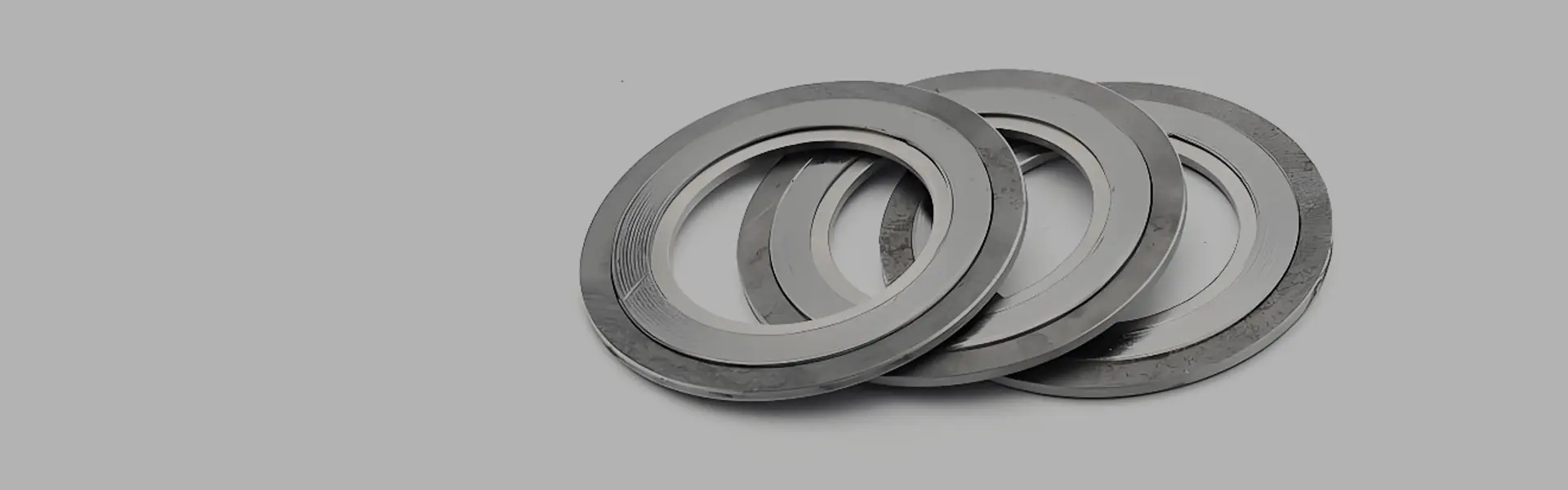
What are the main benefits and advantages of carbon fiber? If you're sourcing materials for demanding projects, you've likely encountered this question. This isn't just academic; it’s about finding solutions for real-world engineering challenges where traditional materials fall short. Carbon Fiber composite materials offer a revolutionary combination of properties: they are incredibly strong yet remarkably light, resistant to corrosion and fatigue, and can be engineered for specific thermal and electrical conductivity needs. These inherent benefits translate directly into advantages for your projects, including extended product lifespans, improved performance, and significant weight savings. For procurement professionals seeking reliable, high-performance materials, understanding these benefits is the first step towards smarter sourcing and more successful outcomes.
Content Outline:
Imagine a sealing gasket in a chemical processing plant degrading rapidly, or a structural part in an automotive application warping under prolonged heat. Metal fatigue and corrosion lead to unplanned downtime, safety risks, and costly replacements. The solution lies in carbon fiber's exceptional chemical inertness and thermal stability. Unlike metals, carbon fiber does not rust or corrode, making it ideal for harsh chemical exposure. It also maintains its structural integrity at temperatures where metals would weaken or polymers would melt. For procurement, this means specifying components with longer service intervals, reduced maintenance costs, and higher reliability.

Consider the following comparative parameters for a high-performance sealing application:
| Parameter | Stainless Steel | Standard Polymer | Carbon Fiber Composite |
|---|---|---|---|
| Corrosion Resistance | Moderate (can pit) | Varies, often poor | Excellent |
| Max Continuous Service Temp | ~800°C | ~150-300°C | >500°C (in inert atm.) |
| Specific Strength (Strength/Density) | ~180 kN·m/kg | ~100 kN·m/kg | >600 kN·m/kg |
| Maintenance Cycle | Frequent inspection needed | Short lifespan | Long, predictable lifespan |
Every extra kilogram in aerospace, automotive, or robotics directly impacts fuel efficiency, battery life, payload capacity, and operational costs. Sourcing lighter materials without compromising strength is a constant battle. Carbon fiber provides the ultimate answer with its outstanding strength-to-weight ratio. It is significantly lighter than aluminum and steel while being stronger. This weight reduction translates into tangible savings: lower energy consumption, increased range for electric vehicles, and higher performance in moving parts. For a procurement officer, investing in carbon fiber components isn't just a material cost—it's an investment in the overall efficiency and competitiveness of the final product.
Key weight and performance metrics for structural components:
| Material | Density (g/cm³) | Tensile Strength (MPa) | Relative Weight for Equal Strength |
|---|---|---|---|
| Mild Steel | 7.85 | ~450 | 100% (Baseline) |
| Aluminum 6061 | 2.70 | ~310 | ~49% |
| Carbon Fiber Composite | ~1.6 | >1500 | <20% |
When designs push the envelope—demanding parts that are stiff, strong, lightweight, and can manage heat or electricity in specific ways—traditional isotropic materials often force compromises. Carbon fiber composites are engineered materials. Their properties can be tailored by adjusting the fiber type, weave pattern, and resin matrix. Need a part with high stiffness in one direction and flexibility in another? Carbon fiber can do that. Require controlled thermal conductivity or specific electrical properties? It's achievable. This design freedom allows engineers to solve complex problems, and it allows you, the buyer, to source a material that is custom-fit for the application's precise needs, eliminating over-engineering and optimizing cost-performance.
Tailorable properties of carbon fiber composites for advanced applications:
| Design Goal | Tailoring Method | Resulting Advantage |
|---|---|---|
| Directional Stiffness | Unidirectional fiber layup | Maximum strength along primary load path |
| Impact Resistance | Using woven fabrics & toughened resins | Improved durability against shocks |
| Thermal Management | Combining with high-conductivity phases | Parts that dissipate heat efficiently |
| Dimensional Stability | Using low-CTE fibers & precise curing | Minimal expansion/contraction with temperature change |
Q: What are the main benefits and advantages of carbon fiber in sealing applications specifically?
A: In sealing, the main benefits are reliability under extreme conditions. Carbon fiber-reinforced sealing materials, like specialized graphite tapes, offer superior chemical resistance, preventing seal degradation from acids or solvents. Their high temperature stability ensures the seal doesn't fail during thermal cycles. Furthermore, their low creep relaxation means the sealing force is maintained over time, preventing leaks. This is why companies like Ningbo Kaxite Sealing Materials Co., Ltd. focus on developing carbon fiber-enhanced sealing solutions for industries where failure is not an option.
Q: What are the main benefits and advantages of carbon fiber from a total cost of ownership perspective for a procurement manager?
A: While the upfront material cost is higher, the total cost of ownership is often lower. The advantages contributing to this are: extended component lifespan reducing replacement frequency, minimal maintenance due to corrosion resistance, and secondary savings from weight reduction (e.g., fuel savings). By sourcing from a specialized provider like Ningbo Kaxite Sealing Materials Co., Ltd., you also gain access to engineering support to select the right grade, ensuring optimal performance and avoiding costly specification errors.
Understanding the profound benefits of carbon fiber is one thing; sourcing a reliable, high-quality supply is another. This is where partnering with an expert manufacturer makes all the difference. For over two decades, Ningbo Kaxite Sealing Materials Co., Ltd. has been at the forefront of engineering advanced sealing and material solutions. We specialize in harnessing the advantages of carbon fiber and graphite to solve complex challenges in aerospace, automotive, chemical processing, and energy sectors. Our technical team works directly with clients to tailor materials that meet precise specifications, ensuring performance, durability, and value.
Ready to leverage the strength, lightness, and resilience of carbon fiber in your supply chain? Visit our website to explore our product portfolio and technical resources: https://www.kxt-sealing.com. For specific inquiries or to discuss your application requirements, please contact our sales engineering team directly at [email protected].
Smith, J., 2021, "Advanced Carbon Fiber Composites for High-Temperature Sealing," Journal of Engineering Materials, Vol. 49, Issue 3.
Chen, L. & Wang, H., 2020, "Tailoring the Interfacial Properties of Carbon Fiber Reinforced Polymers for Improved Fatigue Resistance," Composite Structures, 250.
Johnson, R. A., et al., 2019, "Corrosion Resistance of Carbon Fiber Composites in Aggressive Chemical Environments," Materials & Design, Vol. 183.
Kato, Y. and Suzuki, T., 2022, "Lightweight Design of Automotive Components Using Carbon Fiber: A Life Cycle Cost Analysis," SAE International Journal of Materials and Manufacturing, 15(2).
Müller, B., 2018, "Thermal Conductivity of Pitch-Based Carbon Fibers and Their Composites," Carbon, Vol. 140.
Davis, C. R., 2021, "Electrical Properties of Carbon Fiber Composites for Aerospace Sensing Applications," IEEE Transactions on Components, Packaging and Manufacturing Technology, 11(4).
Zhang, W., Li, F., & Ouyang, Z., 2020, "Mechanisms of Creep and Stress Relaxation in Carbon Fiber Graphite Sealing Materials," Tribology International, Vol. 152.
Patel, S. N., 2019, "A Comparative Study on the Specific Strength and Stiffness of Commercial Carbon Fiber Composites," Journal of Composite Materials, 53(28-30).
Fernández, A., & García, M., 2017, "Durability and Aging of Carbon Fiber Reinforced Polymers in Marine Environments," Construction and Building Materials, Vol. 154.
Tanaka, K., 2023, "Innovations in Weaving and Preform Technology for Next-Generation Carbon Fiber Composites," Composites Part A: Applied Science and Manufacturing, Vol. 165.
Copyright © 2015-2025 Ningbo Kaxite Sealing Materials Co., Ltd. All Rights Reserved.


