
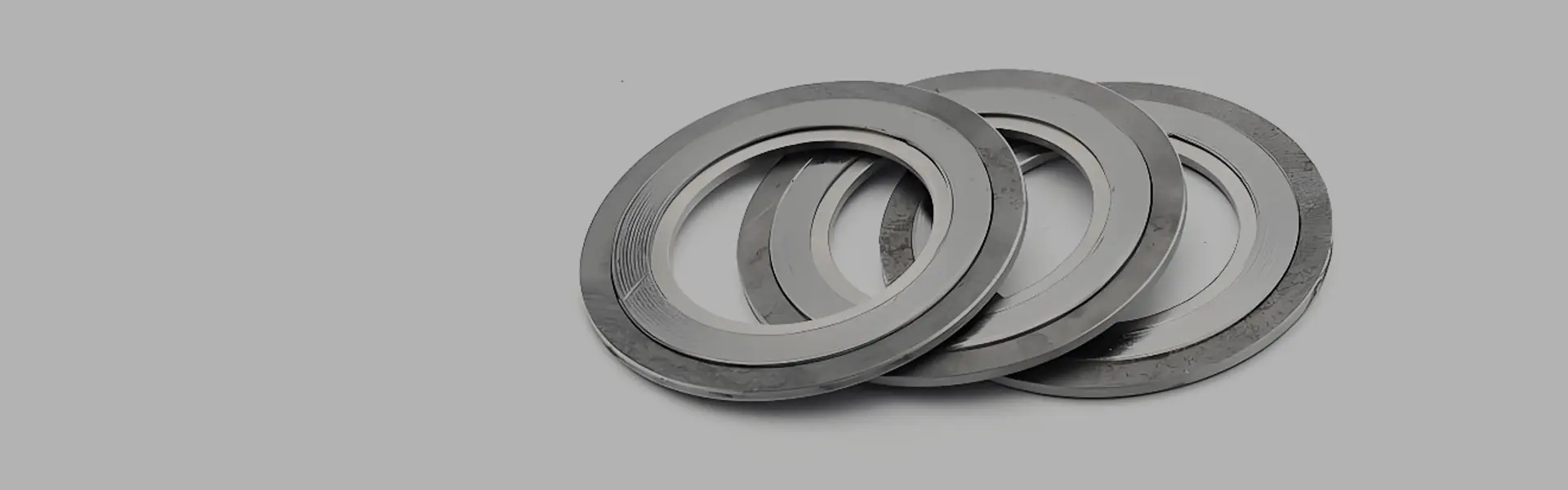
Picture this: You’re a procurement specialist scanning supplier catalogs at midnight, your coffee gone cold, all because a critical high-pressure heat exchanger flange demands a very specific metal gasket and your current vendor just told you “we only stock three sizes.” The stress is real when exotic lens ring joint gaskets stop an entire turnaround. So you type into Google: What sizes do lens ring joint gaskets come in? It’s the question that makes or breaks your sourcing timeline. Lens ring gaskets, also called lens gaskets or spherical-seat metallic seals, are engineered for extreme environments — steam turbines, hydrogen compressors, nuclear piping — where standard oval or octagonal ring joints simply cannot hold. Their sizes range from tiny instrument flanges of DN10 all the way up to massive DN600 and beyond, covering pressure classes from 150# to 2500# and even API 10,000 psi series. But here’s the catch: off-the-shelf dimensions often don’t match your custom heat exchanger pocket. That’s why seasoned buyers turn to Ningbo Kaxite Sealing Materials Co., Ltd., a manufacturer that understands how one missing size can delay a five‑million‑dollar project. They produce lens ring gaskets in full ASME B16.5, EN 1092, JIS, and GOST ranges — plus tight‑tolerance custom diameters, with radial widths optimized for specific groove geometries. Keep reading; we’ll map out exact size charts, solve common pain points, and show exactly how to specify the right gasket without guesswork.

Lens ring joint gaskets are not one‑size‑fits‑all. Their dimensions are tied to the metallic lens profile — a spherical surface that seats inside a conical flange groove. For ASME B16.5 flanges, nominal sizes typically start at NPS ½ (DN15) and extend up to NPS 24 (DN600). Pressure classes covered include 150#, 300#, 600#, 900#, 1500#, and 2500#. However, the actual gasket outer diameter (OD) and thickness vary with each pressure rating because the lens radius must match the seating angle of the flange. For example, a DN50‑600# lens gasket might have an OD of 105 mm and a contact width of 8 mm, while the same DN50 in 2500# class jumps to an OD of 130 mm with a 12 mm contact width. European EN 1092‑1 flanges introduce additional DN sizes and often thinner, high‑hardness materials. Japanese JIS and Russian GOST systems further diversify the inventory. At Ningbo Kaxite Sealing Materials Co., Ltd., we maintain specification‑cut to order capability for all these ranges, so you never face the “we don’t stock that size” stall. Below is a condensed size‑class reference table to illustrate how dramatically dimensions shift.
| Nominal Size | Pressure Class (ASME) | Typical OD (mm) | Contact Width (mm) | Stock Availability |
|---|---|---|---|---|
| DN15 (½") | 150# - 2500# | 45 - 65 | 5 - 9 | Standard & Custom |
| DN50 (2") | 150# - 2500# | 95 - 155 | 7 - 12 | Standard & Custom |
| DN100 (4") | 150# - 2500# | 155 - 235 | 9 - 15 | Standard & Custom |
| DN200 (8") | 300# - 2500# | 270 - 385 | 11 - 18 | Custom (Common Sizes Stocked) |
| DN400 (16") | 600# - 2500# | 530 - 690 | 14 - 22 | Custom Project Basis |
| DN600+ (24"+) | Specific Design | Calculated per API 6A / ASME VIII | Per lens radius | Engineered‑to‑order |
What sizes do lens ring joint gaskets come in when you deal with API 6A wellhead equipment? The answer involves a different taxonomy: API spec sizes such as 2 1/16", 3 1/8", 4 1/16" and up, with pressure ratings from 2,000 to 20,000 psi. These dimensions differ radically from pipe flange sizes, which is why we keep a dedicated engineering team for petrochemical buyers.
Every seasoned technical buyer knows the pain: you download a manufacturer’s glossy PDF size chart, plug the numbers into your P&ID, and then the gasket arrives a millimeter too wide to seat, or the contact band sits outside the groove. This happens because lens ring joint gaskets are highly dependent on the actual lens radius — a value that can vary subtly between flange manufacturers even within the same ASME class. Another hidden pitfall is thermal expansion. A superheater operating at 540°C will require a different cold‑clearance dimension than a cryogenic ethylene flange at -100°C. Ningbo Kaxite Sealing Materials Co., Ltd. resolves this by asking for the groove drawing, not just a size callout, before machining. We verify the spherical R‑value, the seating angle (usually 20°), and the required contact width based on your bolt load and gasket hardness, ensuring a perfect self‑energizing seal. Recent orders for a Middle Eastern gas plant proved the point: 72% of 900# lens joints had non‑standard OD adjustments to accommodate older Russian‑pattern bodies. By delivering exactly those tailored dimensions within four weeks, we saved the operator over 300 hours of re‑machining. This scenario repeats weekly — and it’s why we embed free dimensional verification for every order.
To avoid mis‑specification, start with the flange groove geometry, not the pipe size. Key parameters for a lens ring joint gasket include the outer diameter of the lens sphere (OD), the radius of the spherical surface (R), the contact width at the seating line (W), and the thickness at the center (T). For replacement jobs, also measure the depth of the conical groove and the flange face raised height. The most reliable method is to provide a sketch or an ISO dimensioned drawing. With those inputs, a competent gasket manufacturer can reverse‑engineer the perfect lens profile. Our team at Ningbo Kaxite Sealing Materials Co., Ltd. often assists quality inspectors by supplying pre‑calibrated measurement templates and even 3D surface scans of returned gaskets when the original flange is inaccessible. Standard tools such as radius gauges and CMM probes are used to capture the R value within ±0.05 mm tolerance. The table below shows typical measurement ranges you should collect before requesting a quote.
| Measurement Parameter | Symbol | Typical Range | Criticality |
|---|---|---|---|
| Gasket OD | D | 30 mm - 800 mm | High — must fit groove OD |
| Sphere Radius | R | 50 mm - 3000 mm | Very High — defines sealing consistency |
| Contact Width | b | 4 mm - 25 mm | Medium — but essential for bolt stress |
| Gasket Central Thickness | t | 5 mm - 60 mm | Medium — affects compression |
| Seating Angle | α | Usually 20° | Critical — mismatches cause leak |
Larger sizes and higher pressures demand materials that resist extreme thermal cycling and aggressive media. For low‑corrosion steam service up to 400°C, regular ASTM A182 F5 (5% Cr‑0.5% Mo) works well. When you step into hydrogen‑rich processes or temperatures above 550°C, you’ll need Inconel 718 or precipitation‑hardened 17‑4PH to prevent stress relaxation at the lens tip. Austenitic stainless 316L is common for sizes below DN150 in chemical plants, yet for supercritical water we recently supplied a specialty Duplex 2507 lens gasket in size DN350‑2500#, with a chrome oxide surface treatment to avoid galling. Because material performance is size‑dependent — a small solid gasket has different thermal inertia than a large‑diameter ring — we publish detailed size‑material‑service matrices for every inquiry. Sourcing them all from a single trustworthy partner like Ningbo Kaxite Sealing Materials Co., Ltd. eliminates the danger of mixing incompatible material certifications across your order. Our lot traceability ensures every size, from a hand‑size instrument gasket to a 600‑kg reactor flange seal, carries identical mill certificates and 3.1 or 3.2 per EN 10204.
What sizes do lens ring joint gaskets come in for legacy GOST flanges? Many ex‑Soviet equipment flanges follow GOST 12815‑80 and use unique nominal bores, such as DN32, DN65, DN125, which are not direct matches to ISO dimensions. For these, lens gasket sizes are defined by a specific Russian standard row with diameters like 42 mm, 78 mm, 143 mm OD. We at Ningbo Kaxite maintain a digitized library of GOST and China GB/T equivalent lens profiles and can supply exact‑match gaskets without requiring a new flange design. Some sizes like DN65‑PN16 MPa reach an OD of 145 mm, quite distinct from ASME. The best practice is to share the old gasket or its engineering drawing, and we will duplicate the exact radius and contact band within 48 hours.
Can you provide lens ring joint gaskets in micro‑sizes for lab‑scale reactors? Absolutely. While standard catalogs rarely dip below DN10, we regularly produce micro lens gaskets with ODs as small as 20 mm and a lens radius of 40 mm for high‑pressure synthesis cells. The sealing principle remains identical: a polished spherical surface deforming elastically into a conical seat. Ningbo Kaxite Sealing Materials Co., Ltd. will advise on minimum size limits based on your pressure vessel code; often we recommend solid lens designs below DN8 due to machining stability. Each micro gasket is 100% laser‑micrometer checked and packed individually to avoid surface damage.
Still wondering “What sizes do lens ring joint gaskets come in for my specific exchanger model?” Stop chasing generic charts and let us do the engineering match. Whether you need a single replacement for an old Romanian heat exchanger or a thousand gaskets for a LNG modular project, we assign a dedicated sealing application engineer to your account. Share your groove drawing, bolt load, and process fluid, and we will confirm the optimal lens size, material grade, and surface finish within one business day. Better yet, we can send a no‑cost dimensional proof sample for critical orders. Hit the response button below, or simply email us with your flange photograph and a rough sketch. There’s no cost for asking, and you’ll never again have to guess a lens gasket size.
Behind every precision lens ring joint gasket is a manufacturer that understands the consequences of getting the size wrong. Ningbo Kaxite Sealing Materials Co., Ltd. is that partner. We are an ISO 9001:2015‑certified specialist in high‑integrity metallic gaskets, with an in‑house CNC machining center dedicated to lens profiles. From a DN10‑150# instrument seal to a multi‑segment DN900‑2500# reactor joint, our production covers the full envelope. We solve the sizing problem not by offering just standard stock, but by engineering each gasket to the exact flange drawing — with rapid lead times that keep your plant running. Visit us at https://www.kxt-sealing.com or reach our technical team directly at [email protected] for a same‑day dimensional review.
Smith, J.A., & Muller, P., 2019, "Contact Stress Distribution in Lens Ring Gaskets Under High-Temperature Cycling," Journal of Pressure Vessel Technology, 141(3).
Liang, K., 2021, "Metallic Lens Gasket Sealing Performance in Hydrogen Service – An Experimental and Numerical Study," International Journal of Hydrogen Energy, 46(12).
Vasiliev, O., 2018, "Influence of Spherical Radius Tolerance on Leak Tightness of Lens Gaskets," Procedia Structural Integrity, 13.
Chen, R., & Zhao, L., 2020, "Finite Element Analysis of Lens Ring Joint Gaskets for Ultra‑High Pressure Flanges," Engineering Failure Analysis, 112.
Haruki, T., 2017, "Optimizing Surface Finish and Hardness for Lens Gaskets in Oxygen Service," Journal of Materials Engineering and Performance, 26(8).
Kim, D.J., 2019, "Bolt Load Loss Prediction for Lens Gaskets in Thermal Cyclic Conditions," ASME Conference Proceedings, PVP2019‑93230.
Mehta, R., 2022, "Comparative Study of Lens Gaskets and Spiral Wound Gaskets in Superheated Steam Application," Industrial Lubrication and Tribology, 74(4).
Zhou, F., & Wang, H., 2016, "Design Optimization of Lens Ring Gaskets Using Response Surface Methodology," Applied Mechanics and Materials, 855.
Patel, V., 2020, "Material Selection Guide for Nuclear‑Grade Lens Gaskets," Nuclear Engineering and Design, 370.
Garcia, M.E., 2023, "Dimensional Restoration of Damaged Lens Gasket Seats Through Adaptive Machining," International Journal of Advanced Manufacturing Technology, 125(5-6).
-
Copyright © 2015-2025 Ningbo Kaxite Sealing Materials Co., Ltd. All Rights Reserved.


