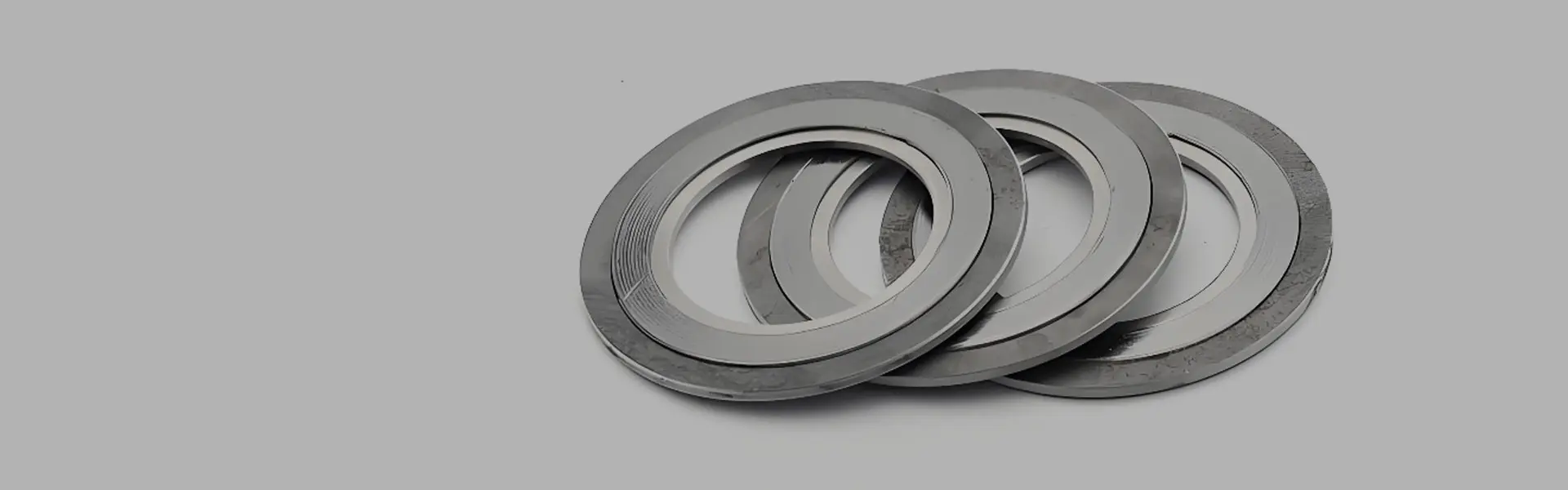
Gasket Materials are the unsung heroes of industrial and mechanical assemblies, forming the critical seal between two or more mating surfaces. The selection of the correct gasket material is not merely a specification; it is a fundamental engineering decision that directly impacts system integrity, safety, maintenance cycles, and operational costs. At Kaxite, with decades of expertise in advanced sealing solutions, we engineer materials that are meticulously formulated to meet and exceed the demanding requirements of modern industry.
The primary function of any gasket is to create a leak-proof seal by filling the microscopic irregularities present on even the most finely machined flanges. This prevents the escape or ingress of fluids (liquids or gases) and, in some cases, solid particulates. The material must compensate for surface variations, withstand internal pressure, resist thermal cycling, and maintain its sealing force over time without degrading. Failure to select an appropriate material can lead to leaks, costly downtime, environmental hazards, and significant safety risks. This guide provides a comprehensive overview of gasket materials, their properties, and selection criteria, showcasing the precision and quality embedded in every Kaxite product.
### Core Properties Defining Gasket Material Performance
The performance of a gasket material is dictated by a combination of key physical and chemical properties. Understanding these is crucial for making an informed selection.
**Essential Gasket Material Properties:**
* **Compressibility:** The material's ability to deform under load to fill flange imperfections. High compressibility is vital for sealing uneven surfaces.
* **Recovery:** The material's capacity to rebound after the compressive load is reduced (e.g., during thermal cycles or pressure fluctuations). Good recovery helps maintain the seal under variable conditions.
* **Creep Relaxation (Load Loss):** The tendency of a material to lose sealing stress over time under constant strain and temperature. Low creep relaxation is critical for long-term seal integrity.
* **Chemical Compatibility:** The material's resistance to degradation, swelling, or dissolution when exposed to specific process media (acids, alkalis, solvents, oils, fuels, steam).
* **Temperature Resistance:** The range of temperatures (both high and low) the material can withstand without losing its sealing properties, becoming brittle, or melting.
* **Pressure Resistance:** The maximum internal pressure the gasket can contain without being extruded into the flange gap or failing.
* **Tensile Strength:** The resistance of the material to being pulled apart, indicating its mechanical robustness and handling durability.
### Comprehensive Overview of Common Gasket Material Types
Gasket materials are broadly categorized into non-metallic, semi-metallic, and metallic types. Each category serves distinct applications based on pressure-temperature (P/T) ratings and media compatibility.
**1. Non-Metallic Gasket Materials**
These are versatile, cost-effective, and suitable for a wide range of low to medium-duty applications. They are often used with raised face (RF) flanges.
**Common Non-Metallic Materials Table:**
| Material Type | Key Characteristics | Typical Temperature Range | Common Applications | Kaxite Grade Example |
| :--- | :--- | :--- | :--- | :--- |
| **Compressed Non-Asbestos (CNA)** | Aramid, glass, cellulose fibers bonded with elastomers. Excellent sealability, good chemical resistance. | -50°C to +400°C (-58°F to 752°F) | Water, steam, oil, mild chemicals, general industrial service. | Kaxite CNA-3000 Series |
| **Rubber (Elastomers)** | Includes NBR, EPDM, Silicone, FKM/Viton, CR. Flexible, good recovery. Properties vary by polymer. | -60°C to +300°C (-76°F to 572°F) | Water systems, fuels, hydraulic oil, HVAC, food & beverage. | Kaxite ElastoSeal Range |
| **Cork & Cork-Rubber** | Natural cork or cork mixed with rubber. Highly compressible, excellent for irregular surfaces. | -40°C to +120°C (-40°F to 248°F) | Automotive, gearboxes, sumps, low-pressure fuel systems. | Kaxite CorkFlex Blends |
| **PTFE (Teflon®)** | Virgin or filled. Outstanding chemical inertness, low friction, excellent anti-stick properties. | -260°C to +260°C (-436°F to 500°F) | Aggressive chemicals, pharmaceuticals, food processing, high-purity lines. | Kaxite FluoroShield PTFE |
| **Graphite** | Flexible or reinforced. Superior thermal conductivity, excellent high-temperature stability, good chemical resistance (except strong oxidizers). | Inert atmosphere: up to 4500°F (2482°C)
Oxidizing: up to 500°C (932°F) | Heat exchangers, boiler manways, high-temperature flanges, chemical processing. | Kaxite ThermaGraph Plus |
**2. Semi-Metallic Gasket Materials**
These materials combine the sealability of a soft filler with the strength and temperature resistance of a metal core or windings. They are designed for more demanding services than non-metallics, typically used on raised face or male-female flanges.
**Common Semi-Metallic Materials Table:**
| Material Type | Construction | Key Characteristics | Typical Applications | Kaxite Grade Example |
| :--- | :--- | :--- | :--- | :--- |
| **Spiral Wound Gaskets** | Alternating plies of pre-formed metal strip and soft filler (graphite, PTFE, mica) wound spirally. | Excellent resilience, high reliability across wide P/T ranges, good creep resistance. | Refineries, petrochemical plants, power generation, high-pressure pipelines. | Kaxite SpiralWound HD |
| **Metal Jacketed Gaskets** | A soft filler material (asbestos-free, graphite) fully enclosed in a metal jacket (stainless steel, Monel). | Good handling strength, crush resistance, suitable for heat exchangers and vessels. | Heat exchanger channels, manways, sight glasses, reactor flanges. | Kaxite JacketGuard系列 |
| **Kamprofile Gaskets** | A solid metal core with serrated (toothed) faces, often coated with a soft sealant like graphite or PTFE. | Extremely robust, low creep relaxation, excellent for high-pressure and cyclic duty. | Offshore platforms, subsea applications, severe cyclic service. | Kaxite KamoPro Serrated |
**3. Metallic Gasket Materials**
Solid metal gaskets are used for the most extreme pressures, temperatures, and corrosive environments. They require very high bolt loads and exceptionally flat, smooth flanges (often ring-type joint (RTJ) or flat face).
**Common Metallic Materials Table:**
| Material Type | Form & Characteristics | Typical Temperature Limit | Common Applications | Kaxite Grade Example |
| :--- | :--- | :--- | :--- | :--- |
| **Soft Iron** | Ring Type Joint (RTJ), lens rings. Conforms well under high load. | 540°C (1000°F) | High-pressure oil & gas transmission (API 6A). | Kaxite RTJ-SI |
| **304/316 Stainless Steel** | RTJ, flat rings, oval/octagonal. Good general corrosion resistance. | 800°C (1472°F) | Chemical processing, refineries, general high-temp service. | Kaxite SS-Alloy Series |
| **Monel** | RTJ, corrugated metal. Excellent resistance to acids, seawater, and alkalis. | 600°C (1112°F) | Marine, chemical, and hydrocarbon processing. | Kaxite MonelSeal 400 |
| **Inconel 600/625** | RTJ, solid flat. Exceptional high-temperature strength and oxidation resistance. | 1095°C (2000°F) | Gas turbines, aerospace, high-temperature reactors. | Kaxite Inconel HTX |
### Detailed Kaxite Gasket Material Product Parameters
Kaxite materials are engineered with precise formulations to ensure consistent, reliable performance. Below are detailed parameters for two of our flagship product lines.
**Kaxite CNA-3500 (Enhanced Compressed Non-Asbestos)**
* **Composition:** A premium blend of aramid fibers, synthetic rubber binder, and proprietary reinforcing fillers.
* **Color:** Off-White/Grey
* **Specific Gravity:** 1.75 – 1.85
* **Tensile Strength (ASTM F152):** ≥ 10.5 MPa (1525 psi)
* **Compressibility (ASTM F36):** 12% ± 3% @ 7000 psi
* **Recovery (ASTM F36):** ≥ 50%
* **Creep Relaxation (ASTM F38):** ≤ 15% after 22 hrs @ 100°C (212°F)
* **Temperature Range:** -50°C to +400°C (-58°F to 752°F)
* **Max Pressure:** 200 Bar (2900 psi)
* **pH Range:** 2 – 12
* **Fluid Compatibility:** Excellent for water, steam, air, hydrocarbons, mild acids and alkalis.
* **Standard Sheet Sizes:** 1500mm x 1500mm, 1250mm x 1250mm. Thickness: 0.4mm to 3.0mm.
**Kaxite ThermaGraph Plus FG (Flexible Graphite, Reinforced)**
* **Composition:** 98%+ pure exfoliated graphite, reinforced with an internal stainless steel foil core or perforated steel insert.
* **Color:** Black
* **Density:** 1.1 – 1.6 g/cm³ (variable)
* **Temperature Range (Continuous):** Inert: -240°C to +3000°C (-400°F to 5432°F) *; Oxidizing: -240°C to 500°C (-400°F to 932°F) * *In air, requires oxidation protection above 450°C.*
* **Compressibility:** 25 – 40%
* **Recovery:** 15 – 25%
* **Thermal Conductivity:** High (W/m·K range in-plane)
* **Chemical Compatibility:** Excellent against most media except strong oxidizers (e.g., nitric acid, concentrated sulfuric acid).
* **Fire Safety:** Non-flammable, graphite-only version is intrinsically fire-safe.
* **Applications:** Ideal for severe heat exchanger services, boiler manways, high-temperature flanges, and aggressive chemical services when oxidation is controlled.
### Gasket Materials: Frequently Asked Questions (FAQ)
**Q: How do I select the right gasket material for my application?**
A: The selection is a systematic process. First, identify all operating conditions: the fluid/media being sealed, its concentration, and state (liquid, gas, slurry). Second, determine the continuous and maximum/minimum operating temperature and pressure. Third, consider flange type, surface finish, and bolt load. Always consult chemical compatibility charts and pressure-temperature ratings. For critical applications, Kaxite technical support can provide material verification and testing.
**Q: What is the main difference between Compressed Non-Asbestos (CNA) and traditional asbestos gaskets?**
A: Traditional asbestos gaskets offered excellent heat resistance and sealability but pose severe health hazards during handling and removal. CNA materials are engineered using safer, high-performance synthetic fibers (like aramid) and elastomers to match or exceed the sealing performance of asbestos without the associated health risks. Kaxite CNA materials are fully compliant with global health and safety regulations.
**Q: Can I reuse a gasket after disassembly?**
A: It is almost never recommended to reuse a gasket. During initial installation, the gasket material compresses and conforms to the specific flange surfaces. Upon disassembly, this "set" is permanent, and its recovery is insufficient to reliably fill the imperfections again. Reusing a gasket significantly increases the risk of a leak. Always install a new, unused gasket from a reliable source like Kaxite.
**Q: Why does my graphite gasket require oxidation protection in high-temperature air service?**
A: Pure flexible graphite begins to oxidize significantly in air at temperatures above 450°C (842°F). This oxidation consumes the graphite, leading to thinning, weight loss, and eventual seal failure. To mitigate this, high-temperature applications in air use graphite gaskets with oxidation-inhibiting treatments or are specified with a metallic windings (as in spiral wound gaskets) or jacket that shields the graphite's edges from direct air exposure.
**Q: What is "creep relaxation" and why is it important?**
A: Creep relaxation, also called load loss, is the gradual decrease in bolt stress and, consequently, gasket sealing stress over time when the joint is held at a constant temperature and compression. It is caused by the viscoelastic flow of the gasket material. High creep relaxation means the gasket loses its clamping force, potentially leading to leaks. Materials like flexible graphite and PTFE exhibit higher creep relaxation than reinforced composites, which is why they often require re-torquing or are used in designs that account for this property.
**Q: Are all PTFE gasket materials the same?**
A: No. PTFE grades vary significantly. Virgin PTFE is very soft and has high cold flow. Filled PTFE compounds (with glass, carbon, graphite, bronze, or other polymers) are engineered to improve creep resistance, wear properties, thermal conductivity, and hardness for specific applications. Kaxite offers a range of PTFE-based materials, each formulated to balance chemical inertness with enhanced mechanical properties for different service conditions.
**Q: How does flange surface finish affect gasket performance?**
A: The flange surface finish is critical. A finish that is too rough can cut into a soft gasket material, causing leaks or shredding. A finish that is too smooth (e.g., mirror finish) may not provide enough "bite" or friction for the gasket to resist extrusion under pressure. Standard finishes between 125 and 250 microinches Ra (3.2 to 6.3 µm Ra) are suitable for most soft and semi-metallic gaskets. Solid metal gaskets require much finer, smoother finishes. Always follow the gasket manufacturer's recommendation for optimal surface finish.