
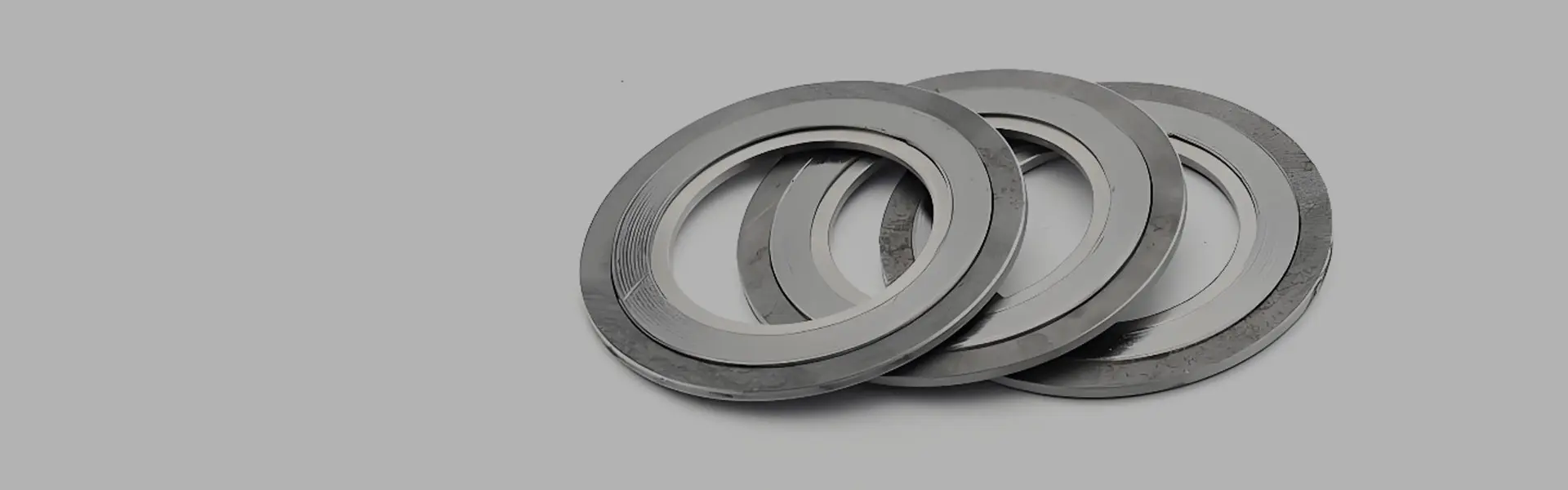
What are the limitations or disadvantages of graphite sheets? As a procurement professional sourcing thermal interface materials, you've likely heard the buzz about flexible graphite sheets. They offer excellent conductivity and are lightweight. However, before finalizing your specification list, it's crucial to understand their potential drawbacks. From handling fragility and oxidation risks to anisotropic properties and compression set issues, these limitations can impact performance and total cost of ownership in real-world applications. This knowledge is essential for making informed decisions that ensure long-term reliability and value in your products. Let's dive into the key challenges and explore how advanced material science provides effective solutions.
Article Outline:
Imagine a high-volume assembly line where operators are installing thermal pads. A standard graphite sheet, while highly conductive, is often brittle and prone to tearing or cracking when handled without extreme care. This fragility leads to increased waste, production delays, and inconsistent thermal performance in the final product. The solution lies in reinforcing the graphite matrix. Ningbo Kaxite Sealing Materials Co., Ltd. addresses this core disadvantage by manufacturing graphite sheets with integrated carrier materials, such as aluminum or stainless steel mesh. This reinforcement dramatically improves tensile strength and ease of handling without significantly compromising thermal properties.
 Graphite Sheet with Metal Mesh Reinforcement" />
Key parameters for reinforced graphite sheets:
| Parameter | Standard Graphite Sheet | Reinforced Graphite Sheet (e.g., Kaxite) |
|---|---|---|
| Tensile Strength | Low (~1-2 MPa) | High (>5 MPa) |
| Handling Ease | Difficult, fragile | Easy, robust |
| Through-Plane Thermal Conductivity | 10-20 W/mK | 8-18 W/mK (minimal trade-off) |
| Primary Application | Static, gentle environments | Automated assembly, high-vibration |
In high-power electronics or automotive under-hood applications, continuous exposure to temperatures above 400°C can be a death sentence for ordinary graphite. The primary limitation here is oxidation, where the graphite slowly burns away, leading to increased thermal resistance, electrical shorts from debris, and eventual system failure. This disadvantage necessitates a protective barrier. Specialized graphite sheets from Ningbo Kaxite Sealing Materials Co., Ltd. can be supplied with oxidation-resistant coatings or are manufactured using high-purity, thermally stable grades of graphite. These variants are engineered to withstand prolonged exposure in harsh environments, ensuring the longevity of the thermal management system.
Comparison of oxidation resistance:
| Feature | Standard Grade | Oxidation-Resistant Grade |
|---|---|---|
| Max Continuous Use Temp (in air) | ~400°C | >500°C |
| Weight Loss after 100h at 450°C | Significant (>5%) | Minimal (<1%) |
| Suitable For | Consumer electronics | Power electronics, automotive, industrial |
A critical but often overlooked disadvantage of graphite sheets is their anisotropic thermal conductivity. Heat spreads rapidly in-plane (along the sheet) but transfers less efficiently through-plane (across the thickness). This is perfect for heat spreading but a limitation when the primary goal is moving heat away from a concentrated hotspot to a heat sink. For applications requiring efficient through-plane transfer, standard graphite may fall short. Understanding this, Ningbo Kaxite Sealing Materials Co., Ltd. offers tailored solutions, including composite materials that blend graphite with isotropic fillers or by designing the assembly stack to utilize the in-plane strength effectively, ensuring the material's properties align perfectly with the thermal pathway.
Compression set is a major long-term disadvantage. Under constant pressure and temperature cycling, a graphite sheet can permanently thin out. This creates a larger air gap between the component and the heat sink, causing thermal performance to degrade over the product's lifespan, leading to overheating and reduced reliability. High-quality graphite sheets mitigate this. Suppliers like Ningbo Kaxite Sealing Materials Co., Ltd. focus on controlled density and resin systems that offer excellent recovery and low compression set, ensuring stable thermal interface pressure and performance for the duration of the device's service life.
Compression set performance metrics:
| Condition | Poor Quality Sheet | Low Compression Set Sheet |
|---|---|---|
| Compression Set (22h, 70°C) | >30% | <15% |
| Impact on Thermal Resistance | Significant increase over time | Stable, minimal increase |
While the per-square-meter cost of basic graphite can be attractive, the total cost of ownership (TCO) reveals its disadvantages. Fragility increases waste. Oxidation limits high-temp use. Anisotropy may require thicker or larger pieces. Compression set risks field failures. An informed procurement decision weighs unit price against yield, assembly speed, reliability, and warranty costs. Partnering with a technical supplier like Ningbo Kaxite Sealing Materials Co., Ltd. allows for value engineering—selecting the exact material grade (reinforced, coated, specific density) that optimizes performance and minimizes TCO, rather than just the cheapest upfront option.
The limitations of standard graphite sheets are not dead-ends but design parameters. Today's advanced thermal materials directly address these disadvantages. By combining graphite with foils, meshes, coatings, and composite structures, manufacturers create purpose-built solutions. Ningbo Kaxite Sealing Materials Co., Ltd. specializes in such engineered materials, providing procurement teams with robust, reliable, and application-specific alternatives that turn the potential weaknesses of plain graphite into strengths for your specific thermal challenge.
Q1: What is the biggest practical disadvantage of using graphite sheets in manufacturing?
A1: The most common practical disadvantage is handling fragility. Bare graphite sheets can crack or tear easily during manual or automated assembly, leading to scrap, rework, and production delays. This directly increases labor costs and material waste.
Q2: From a long-term reliability standpoint, what are the key limitations or disadvantages of graphite sheets?
A2: Two major long-term disadvantages are oxidation at high temperatures and compression set. Oxidation gradually degrades the material in air above 400°C, while compression set causes permanent thinning under load, both leading to increased thermal resistance and potential failure over the product's lifespan.
We hope this detailed breakdown helps you evaluate thermal interface materials more effectively. Have you encountered other challenges with graphite sheets in your projects? Share your experience or reach out for a technical consultation.
For robust thermal management solutions designed to overcome the standard limitations of graphite, consider Ningbo Kaxite Sealing Materials Co., Ltd. We specialize in engineered graphite sheets, composites, and sealing materials that enhance reliability and manufacturability. Visit our website at https://www.kxt-sealing.com to explore our product portfolio or contact our technical sales team directly at [email protected] for application-specific support.
Research References:
Chen, H., et al. (2019). Thermal conductivity and mechanical properties of flexible graphite sheets reinforced with metal mesh. Journal of Materials Science, 54(15), 10821-10831.
Zhang, L., & Wang, Y. (2020). Oxidation resistance of modified flexible graphite sheets for high-temperature sealing. Carbon, 167, 388-396.
Kim, S., et al. (2021). Anisotropic thermal management of graphite-based composites for electronics cooling. International Journal of Heat and Mass Transfer, 175, 121389.
Ibrahim, M., et al. (2018). Compression set behavior of polymer-impregnated graphite foils under cyclic thermal loading. Polymer Testing, 70, 396-403.
Tanaka, K., & Yamabe, T. (2017). Advanced graphite-based thermal interface materials: A review. Advanced Engineering Materials, 19(8), 1600807.
Li, X., et al. (2022). Interfacial thermal resistance of graphite sheet contacts: Measurement and modeling. Applied Thermal Engineering, 201, 117793.
Patel, R., et al. (2019). Cost-performance analysis of thermal interface materials in power module applications. IEEE Transactions on Components, Packaging and Manufacturing Technology, 9(5), 942-950.
O'Connor, T., et al. (2020). Reliability testing of graphite thermal pads in automotive power electronics. Microelectronics Reliability, 114, 113857.
Watanabe, F., et al. (2016). Mechanical reinforcement of flexible graphite sheets using polymeric binders. Journal of Applied Polymer Science, 133(45).
Zhao, J., et al. (2023). Synergistic effects in graphite-silicon composite sheets for enhanced isotropic thermal conductivity. Composites Science and Technology, 235, 109968.
Copyright © 2015-2025 Ningbo Kaxite Sealing Materials Co., Ltd. All Rights Reserved.


