
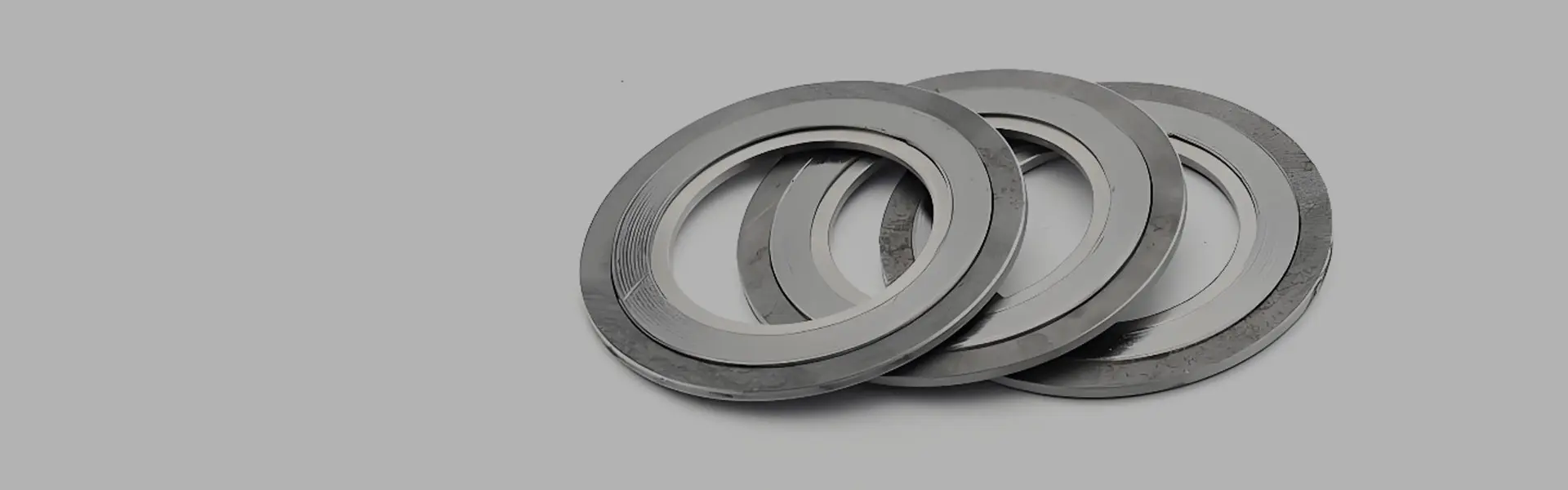
What are the different grades and thicknesses available for PTFE sheets? This question is fundamental for engineers, buyers, and manufacturers who rely on this versatile material for critical applications. Selecting the wrong grade or thickness can lead to costly failures, from chemical leaks in a processing plant to premature wear in high-speed machinery. Understanding the full spectrum of PTFE Sheet options is not just about specifications; it's about ensuring project success, operational safety, and long-term reliability. This guide will demystify PTFE sheets, providing a clear roadmap from material grades to standard thicknesses, helping you make an informed and confident purchasing decision.
Article Outline:

Imagine a chemical plant where aggressive solvents are transferred daily. A standard gasket fails, causing a small but dangerous leak, leading to downtime, safety concerns, and cleanup costs. The root cause? An incorrect PTFE grade. Not all PTFE sheets are created equal. Different grades offer unique properties to solve specific industrial problems. Virgin PTFE provides the highest purity and chemical resistance for semiconductor or food-grade applications. For mechanical parts requiring better wear resistance and reduced deformation, glass-filled or carbon-filled PTFE grades are essential. MoS2-filled grades offer superior lubrication for bearings and seals. The key is matching the material's inherent properties to your operational demands. Ningbo Kaxite Sealing Materials Co., Ltd. specializes in providing this precise match, offering a comprehensive range of grades to ensure your application withstands its specific challenges.
| Common PTFE Sheet Grades | Key Characteristics | Typical Applications |
|---|---|---|
| Virgin / Pure PTFE | Excellent chemical resistance, high dielectric strength, FDA compliance | Gaskets in chemical processing, linings, electrical insulation, food & pharma |
| Glass Filled PTFE (e.g., 15%, 25%) | Improved compressive strength, reduced creep, better wear resistance | Bearings, bushings, thrust washers, seals in mechanical systems |
| Carbon Filled PTFE | Enhanced thermal conductivity, higher stiffness, excellent wear properties | Piston rings, compressor rings, applications requiring heat dissipation |
| Bronze Filled PTFE | Superior load-bearing capacity, excellent thermal conductivity | Heavy-duty bearings, guide rings, wear plates |
Now, consider a fabricator tasked with creating a lining for a large, abrasive slurry tank. Using a sheet that's too thin leads to rapid wear-through and product contamination. Using one that's unnecessarily thick blows the budget and makes installation difficult. Thickness is a critical, cost-driving factor. PTFE sheets are available in a wide range to suit various functions. Thin sheets (0.5mm to 1mm) are perfect for lightweight gaskets, shims, and insulating washers. Medium thicknesses (2mm to 6mm) are the workhorses for standard flanged gaskets, diaphrams, and machine components. For demanding applications like tank linings, heavy-duty bearing pads, or cutting boards, thick sheets (10mm to 50mm+) provide the necessary durability and structural integrity. Knowing the pressure, wear, and dimensional requirements of your project is the first step to selecting the perfect thickness.
| Thickness Range | Common Formats | Primary Use Cases |
|---|---|---|
| 0.5mm - 1.5mm | Sheets, Films | Light gaskets, electrical insulation, protective layers |
| 2mm - 6mm | Sheets, Skived Sheets | Standard industrial gaskets (ASME B16.21), seals, machined parts |
| 10mm - 25mm | Sheets, Blocks, Rods (for machining) | Tank linings, heavy-duty wear plates, custom-machined components |
| 30mm and above | Blocks, Sintered Forms | Solid industrial parts, large bearing surfaces, specialized fabrication |
Q: What are the different grades and thicknesses available for PTFE sheets, and how do I choose?
A: As outlined above, grades range from pure virgin PTFE to various filled compounds (glass, carbon, bronze), each modifying properties like wear, creep, and conductivity. Thicknesses typically range from thin films (0.1mm) to thick blocks (100mm+). The choice depends entirely on your application's mechanical, chemical, and thermal requirements. For instance, a dynamic seal needs a filled grade for wear resistance and a thickness that fits the gland design, while a chemical liner needs virgin PTFE and a thickness that accounts for abrasion.
Q: What are the different grades and thicknesses available for PTFE sheets for high-purity applications?
A: For high-purity industries like pharmaceuticals or food processing, only Virgin PTFE grades are suitable, as they contain no fillers that could leach. The thickness is chosen based on the sealing pressure and flange design. Common thicknesses for gaskets in these industries are 1.5mm and 3mm. A trusted supplier like Ningbo Kaxite Sealing Materials Co., Ltd. can provide certified virgin PTFE sheets in the precise thickness you need, ensuring compliance with stringent industry standards.
We hope this guide has clarified the critical choices surrounding PTFE sheets. Have a specific application or a unique challenge not covered here? Reach out to our team of experts.
For reliable, high-performance PTFE sheet solutions tailored to your exact grade and thickness requirements, consider Ningbo Kaxite Sealing Materials Co., Ltd. As a dedicated manufacturer and supplier, we empower buyers and engineers with consistent quality, technical expertise, and a comprehensive product range to solve complex sealing and lining problems. Visit our website at https://www.kxt-sealing.com to explore our catalog or contact us directly via email at [email protected] for a detailed consultation.
Deng, M., Shao, H., Zhang, Q., Li, X., & Wang, F. (2021). Enhanced wear resistance of carbon fiber reinforced PTFE composites under dry sliding conditions. Wear, 477, 203876.
Kumar, S., Singh, R., & Ahuja, I. P. S. (2020). Evaluation of mechanical and thermal properties of glass microsphere filled PTFE composites. Materials Today: Proceedings, 28, 1482-1487.
Li, Y., Wang, Q., & Wang, T. (2019). Study on the friction and wear properties of bronze-filled polytetrafluoroethylene composites. Polymer Testing, 79, 106049.
Zhang, L., Chen, J., & Li, H. (2022). Effect of filler type on the creep behavior of filled PTFE composites for seal applications. Polymer Engineering & Science, 62(3), 789-798.
Patel, K., & Gupta, T. (2018). Dielectric properties of virgin and filled PTFE sheets for high-frequency applications. Journal of Applied Polymer Science, 135(24), 45521.
Oshima, T., & Yamabe, M. (2017). Chemical resistance of modified PTFE sheets in harsh acidic and alkaline environments. Corrosion Science, 124, 70-79.
Fernández, A., Munoz, M., & González, J. (2020). Compressive strength and deformation analysis of thick PTFE blocks for structural bearings. Construction and Building Materials, 259, 119773.
Chen, G., & Zhao, S. (2021). Thermal conductivity enhancement of PTFE-based composites with different conductive fillers. Composites Part A: Applied Science and Manufacturing, 140, 106154.
Wang, J., Liu, B., & Zhang, Y. (2019). Processing and properties of skived PTFE sheets with controlled crystallinity for gasket applications. Journal of Materials Processing Technology, 273, 116235.
Singh, A., & Tiwari, A. (2022). A review on the applications of PTFE sheets in chemical and mechanical sealing systems. International Journal of Advanced Manufacturing Technology, 119(5), 3021-3035.
Copyright © 2015-2025 Ningbo Kaxite Sealing Materials Co., Ltd. All Rights Reserved.


