
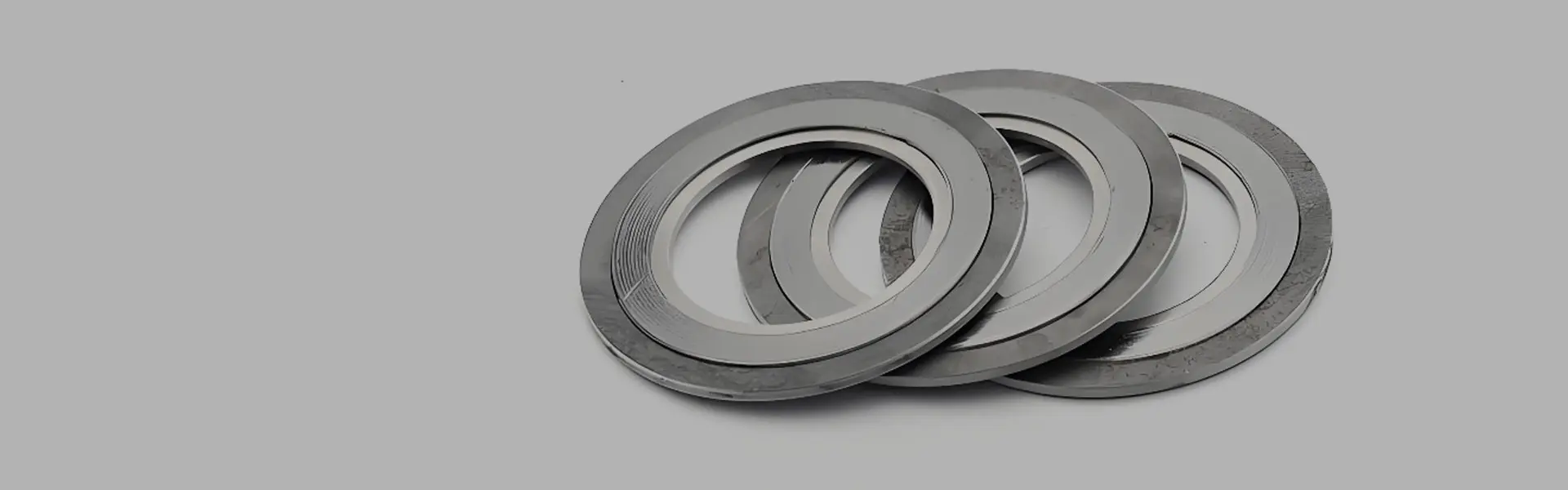

Virgin PTFE is chemically unmatched but mechanically soft. By compounding PTFE suspension resin with glass fiber, carbon fiber, graphite, barium sulfate or MoS₂, Kaxite engineers a PTFE modified material that holds its shape under load, resists wear in dynamic service and conducts heat away from the sealing face.
PTFE modified material is a filled PTFE compound produced from PTFE suspension resin and selected fillers such as glass fiber, glass microspheres, graphite, carbon fiber, barium sulfate (BaSO₄) and molybdenum disulfide (MoS₂). The fillers improve wear resistance, creep resistance, dimensional stability, thermal conductivity and mechanical strength while retaining PTFE's chemical resistance and low friction. Kaxite supplies PTFE modified material in molded or skived rods, sheets, tubes, rings and custom machined parts for sealing, bearing, valve, pump and chemical processing applications.
PTFE modified material — also called filled PTFE, PTFE compound or modified PTFE compound — is made by blending inorganic or organic fillers into PTFE suspension resin before molding or skiving. The base polymer keeps its famous properties: near-universal chemical resistance, a very low coefficient of friction, excellent dielectric strength and a service window from cryogenic temperatures up to roughly 260 °C.
What virgin PTFE cannot do is carry load. Under sustained compression it creeps (cold-flows), in dry running contact it wears quickly, and its low thermal conductivity traps friction heat at the sealing surface. Those three weaknesses are exactly what filler technology solves.
Kaxite produces PTFE modified material in molded and skived forms, then machines it into seals, rings, bearing pads, valve seats, guideways, insulating components and other custom parts. The right grade depends on temperature, pressure, media, shaft speed, load and counterface material — never on filler percentage alone.
Carbon fiber, graphite and MoS₂ build a transfer film that extends dry-running and dynamic seal life.
Glass and carbon fiber create a load-bearing skeleton that resists cold flow under bolted compression.
Graphite and carbon fiber move friction heat away from the contact zone, reducing thermal runaway.
Glass microspheres and BaSO₄ keep tolerances tight across temperature swings and long service cycles.
Filler selection is the single biggest decision in specifying a filled PTFE compound. Use this table as a starting point, then confirm the final formulation with our technical team.
| Filler | Main Benefit | Typical Application | Notes |
|---|---|---|---|
| Glass fiber | Improves tensile strength, stiffness, wear resistance and creep resistance | Seals, rings, bearing parts, structural components | Not ideal for hydrofluoric acid or hot alkalis |
| Glass microspheres | Improves dimensional stability and reduces deformation | Precision parts, seals, insulation components | Lower abrasion to the counterface than glass fiber |
| Graphite | Improves thermal conductivity, self-lubrication and wear resistance | Bearings, seals, guideways, high-temperature parts | May affect electrical insulation |
| Carbon fiber | Increases strength, stiffness, creep resistance and thermal conductivity | High-load seals, bearing pads, pump components | Conductive; can be abrasive to some counterfaces |
| Barium sulfate (BaSO₄) | Improves chemical resistance, density and dimensional stability | Chemical equipment, seals, linings | Good for chemical service where glass is not suitable |
| Molybdenum disulfide (MoS₂) | Improves friction and wear performance under high loads | Bearings, seals, sliding parts | Often combined with graphite or carbon fiber |
| Clay / kaolin | Improves hardness and reduces cost | General industrial parts | Confirm the grade for chemical compatibility |
| Other fillers | Bronze, PEEK and other fillers may be available on request | Custom sealing and bearing applications | Availability depends on formulation and order quantity |
| Property | Typical Range | Notes |
|---|---|---|
| Density | 2.1–2.3 g/cm³ | Varies with filler type and loading |
| Tensile strength | 15–35 MPa | Higher with glass or carbon fiber |
| Elongation at break | 100–300% | Decreases with higher filler loading |
| Hardness | 55–65 Shore D | Depends on filler and grade |
| Continuous service temperature | −200 °C to +260 °C | Confirm for the specific grade and application |
| Water absorption | <0.01% | Typical for PTFE compounds |
| Coefficient of friction | 0.05–0.20 | Depends on load, speed and counterface |
| Dielectric strength | 15–25 kV/mm | Conductive fillers reduce insulation performance |
Related products you may also need: PTFE Rod, PTFE Tube, PTFE Sheets, PTFE Parts and PTFE O-Ring.
Match your dominant requirement to a filler direction, then fine-tune loading, particle size and form with Kaxite's technical team.
| Application Requirement | Recommended Filler Direction | Reason |
|---|---|---|
| High wear resistance | Carbon fiber, graphite, MoS₂ | Improves self-lubrication and wear life |
| High strength and creep resistance | Glass fiber, carbon fiber | Increases stiffness and load-bearing capacity |
| Chemical resistance | BaSO₄, graphite, carbon | Avoids glass fiber in HF and hot alkali service |
| Thermal conductivity | Graphite, carbon fiber | Helps dissipate heat in dynamic seals |
| Electrical insulation | Glass fiber, glass microspheres, virgin PTFE | Conductive fillers are not suitable |
| Food or pharmaceutical contact | Confirm FDA-compliant grade | Not all filled PTFE grades are food-contact approved |
Kaxite controls PTFE modified material through raw material inspection, formulation control, molding or skiving process control, dimensional inspection and batch traceability. Depending on the order and application, we can provide material certificates, dimensional reports and batch records. For critical sealing or bearing applications, please confirm temperature, pressure, media, load, speed and certification requirements before ordering.
PTFE modified material is a filled PTFE compound made from PTFE suspension resin and fillers such as glass fiber, glass microspheres, graphite, carbon fiber, BaSO₄ or MoS₂. The fillers improve mechanical, thermal and wear properties while the compound keeps PTFE's chemical resistance and low friction.
Virgin PTFE is unfilled. Modified or filled PTFE contains fillers that improve strength, wear resistance, creep resistance or thermal conductivity. In some markets, "modified PTFE" also refers to TFM, a chemically modified PTFE. On this page, Kaxite PTFE modified material refers to filled PTFE compounds, not TFM. Please confirm the exact grade required for your application.
Common fillers include glass fiber, glass microspheres, graphite, carbon fiber, barium sulfate, molybdenum disulfide and clay. Other fillers such as bronze or PEEK may be available on request. Availability depends on formulation and order quantity.
Typical continuous service temperature is from −200 °C to +260 °C, but the actual range depends on filler type, load, media and application. Confirm the specific grade before use.
Not all filled PTFE grades are food-contact approved. Some grades can be produced with FDA-compliant raw materials, but certification depends on the specific formulation. Contact Kaxite to confirm before use in food, pharmaceutical or medical applications.
Yes. It can be turned, milled, drilled and cut. Because fillers can be abrasive, tooling and machining parameters should be adjusted. Kaxite can supply rods, sheets, tubes and near-net shapes for machining.
Send the following information: product form, dimensions, filler type or application requirement, quantity, working temperature, pressure, media, and drawings if available. Kaxite will recommend a suitable grade and provide a quotation.
Tell us the temperature, pressure, media, load and dimensions — we will recommend the right filled PTFE grade and quote it.
Send Inquiry NowAddress
No. 432 Zhenhai Middle Road, Luotuo Street, Zhenhai District, Ningbo City, Zhejiang China
Copyright © 2015-2025 Ningbo Kaxite Sealing Materials Co., Ltd. All Rights Reserved.


