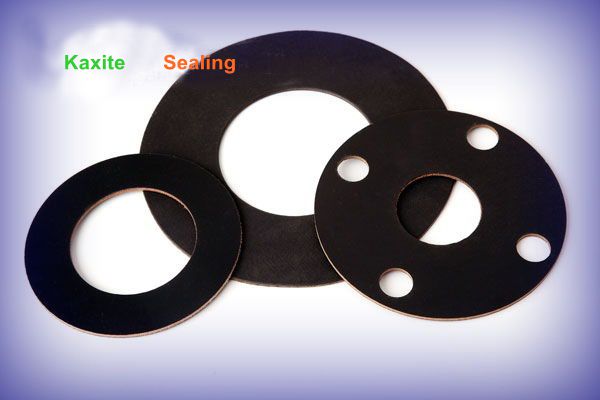

Discover Kaxite Sealing's premium Neoprene Faced Phenolic Gaskets, engineered for superior sealing in demanding industrial applications. These gaskets combine durable phenolic cores with flexible neoprene facings to resist chemicals, oils, and high pressures, ensuring reliable performance for engineers and maintenance professionals. Ideal for pipelines, machinery, and automotive systems, they prevent leaks, reduce downtime, and enhance operational safety. With Kaxite Sealing's innovative design, these gaskets outlast competitors by offering unmatched durability and temperature resistance. Elevate your projects with confidence and efficiency today!
Neoprene Faced Phenolic Gaskets have been usedas standard ''flat'' isolating gaskets in the oil and gas industries for many years. Soft neoprene rubber sheets are factory applied to both sides of a laminated phenolic retainer providing an effective sealing surface. The temperature limit of these gaskets is approximately +175o F. (+80o C.).
Application of Neoprene Faced Phenolic Gaskets
To limit the extent and cost of cathodic protection current to only those pipes that need to be protected from the main cathodic protection system
To electrically "split up" long pipelines into distinctive cathodic protection systems
To isolate a pipeline to ensure that cathodic protection or stray electricity currents do not cause increased corrosion, or cause a hazard
To isolate piping systems where dissimilar metals are present
To eliminate static loading charge transfer in discharge or loading operations at oil storage terminals
Gasket Type:
Type E (Full Face Gasket)
This gasket kit provides complete protection of both flange faces. The gasket has same outside diameter of flanges. This feature will prevent collection of foreign matter between the flange faces to ensure complete cathodic isolation.
Type F (Ring Gasket)
This gasket is manufactured to fit only the raised face surface of the flanges. Outside diameter of the gasket is designed to be slightly less than the inside diameter of the bolt circle. It is recommended that the flanges be wrapped to prevent foreign material from "shorting out" the flanges.
We use cookies to offer you a better browsing experience, analyze site traffic and personalize content. By using this site, you agree to our use of cookies. Privacy Policy